A chess tactic is a short sequence of moves that creates an immediate threat your opponent cannot answer without losing material or getting checkmated. While strategy is about long-term planning, tactics decide games in the next two or three moves – and most games below grandmaster level are won or lost because of them.
There are dozens of tactical patterns in chess, but five appear in almost every game: the fork, the pin, the skewer, the discovered attack, and the back rank weakness. Learn to spot these and you will start winning games you used to draw — or save games you used to lose.
What Makes a Move a Tactic?
A target. Every tactic needs something to attack — an undefended piece, a poorly placed king, a weak back rank. Without a target, there is no tactic.
A forcing move. Tactics are built on moves that demand an immediate response: checks, captures, or threats of checkmate. When your opponent has only one or two legal replies, you control the flow of the game.
A gain. The sequence ends with something concrete — extra material, a better position, or checkmate.
1. The Fork
A fork happens when one piece attacks two or more enemy pieces at the same time. Since your opponent can only move one piece per turn, at least one of the attacked pieces will be captured on your next move.
Knights are the most dangerous forking pieces because their L-shaped movement is harder to anticipate. A knight fork that simultaneously attacks the king and queen — a “royal fork” — wins the queen for free after the king moves out of check.
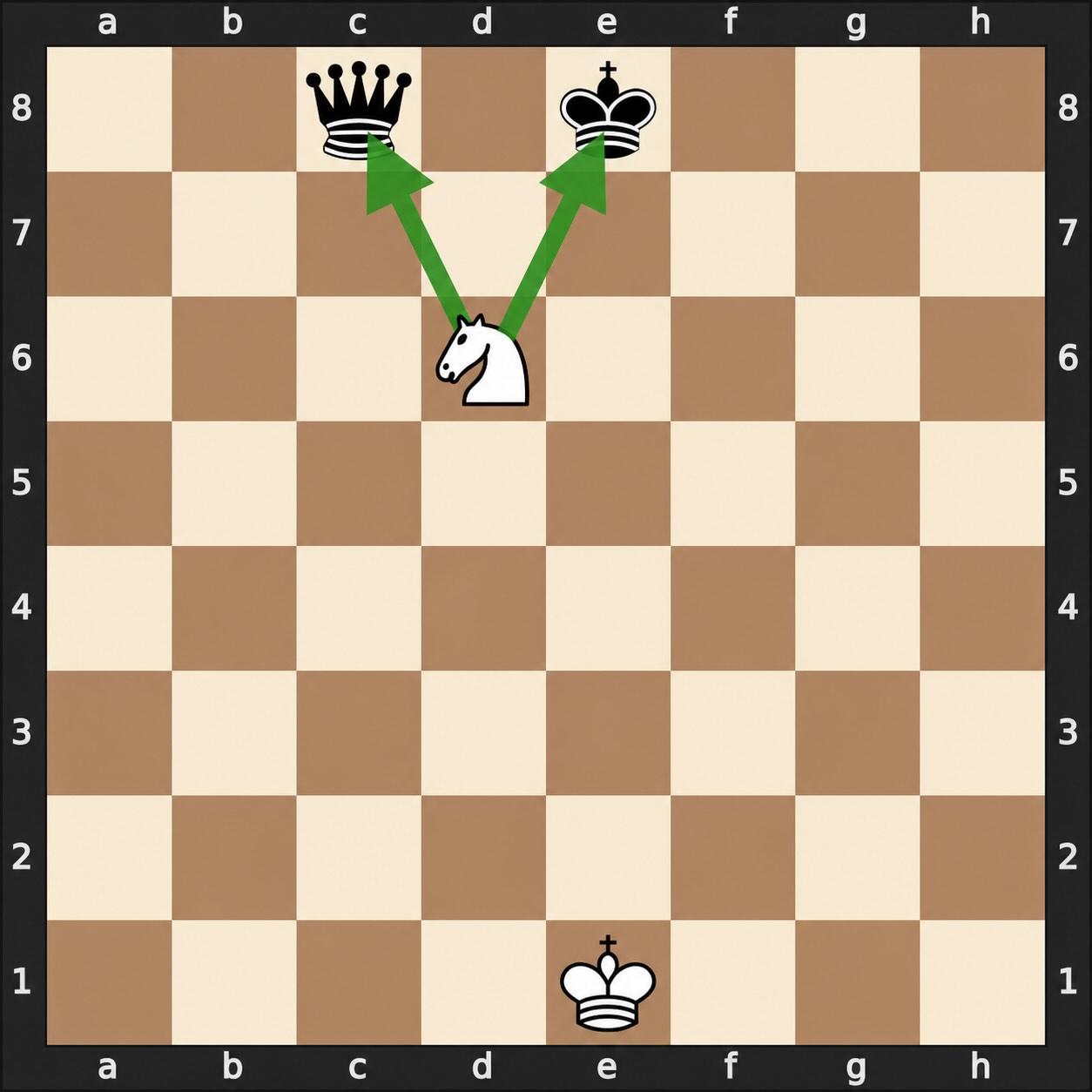
How to recognize it: Look for knight outposts near the opponent’s king and queen. Squares that a knight can reach in one move while simultaneously covering two valuable targets are potential fork squares. Bishops, rooks, and queens can also fork — any piece that attacks in two directions at once.
How to set one up: Force the enemy king to a square where it can be forked. Checks that drive the king to a specific square are a common setup for a fork on the following move.
2. The Pin
A pin happens when a piece cannot move without exposing a more valuable piece behind it. The pinned piece is effectively frozen — moving it would cause a bigger loss than staying put.
There are two kinds of pins. An absolute pin is when the piece behind is the king — the pinned piece literally cannot move because that would leave the king in check, which is illegal. A relative pin is when the piece behind is valuable but not the king — the pinned piece could move, but doing so would lose significant material.
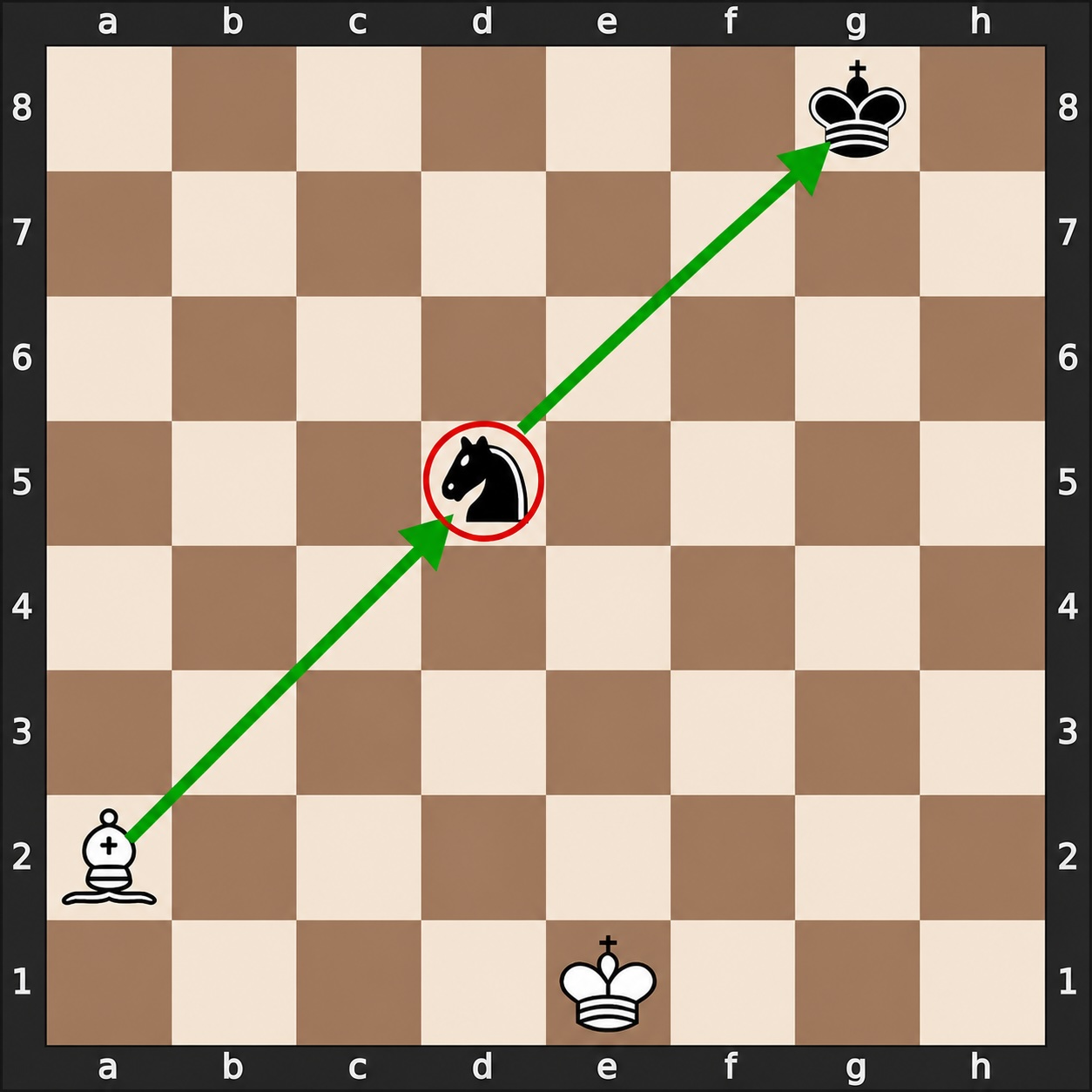
How to recognize it: A piece is pinned whenever a long-range enemy piece (bishop, rook, or queen) is aimed at it along a line or diagonal that also covers a more valuable piece behind it. Always check what is behind every piece under attack.
How to exploit a pin: Once a piece is pinned, pile pressure onto it by attacking it with pawns or other pieces. The pinned piece cannot retreat or capture back, so it becomes a permanent target until the pin is broken.
How to break a pin: Move the piece behind the pin out of the line of fire, interpose another piece to block the pin, or capture the piece creating the pin.
3. The Skewer
A skewer is the opposite of a pin. Instead of attacking a less valuable piece with a more valuable one hiding behind it, a skewer attacks a more valuable piece directly. That piece is forced to move — and the piece behind it gets captured.
Think of it this way: in a pin, the valuable piece is safe but trapped. In a skewer, the valuable piece has to move and the material behind it is lost.
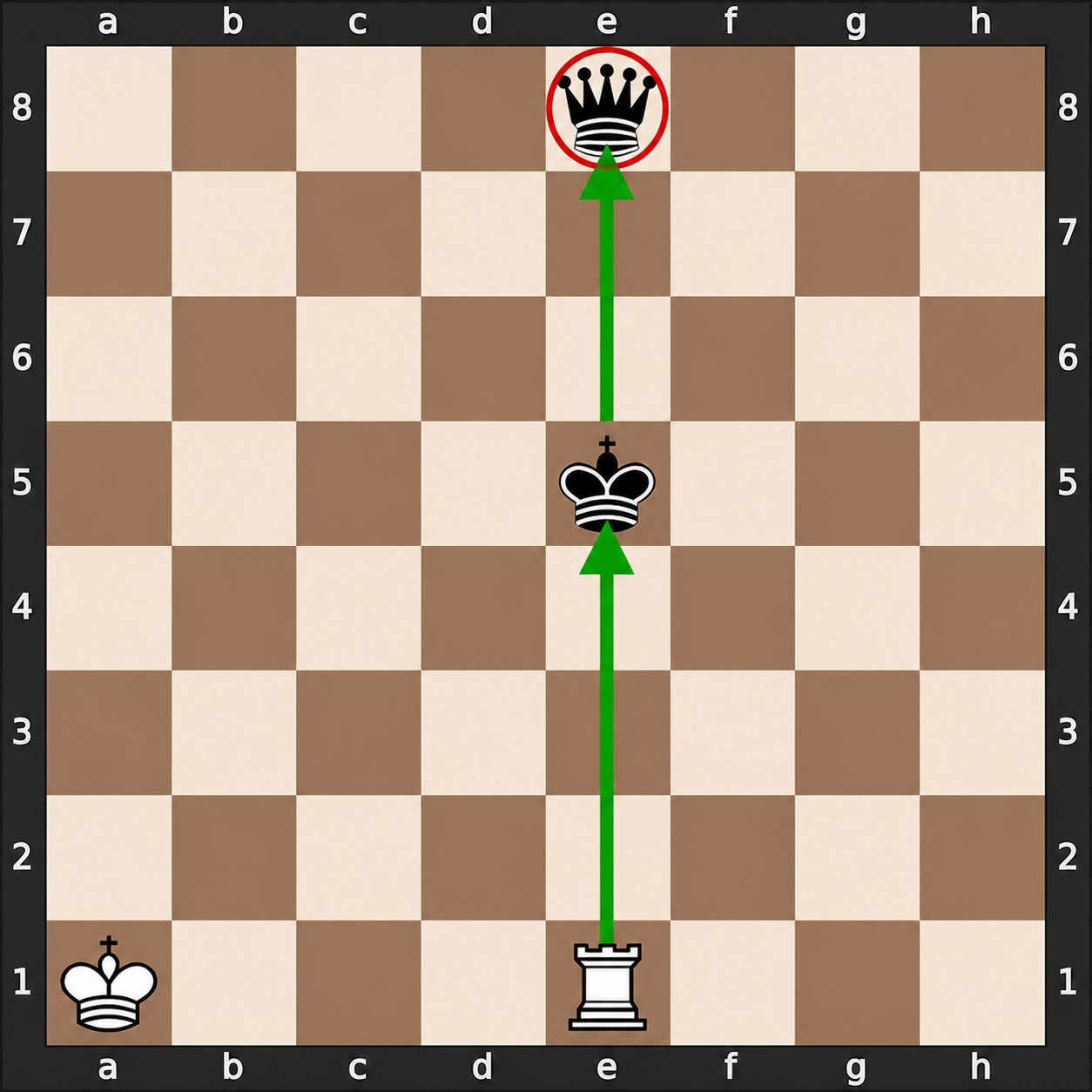
How to recognize it: Look for situations where two of your opponent’s valuable pieces are lined up on the same rank, file, or diagonal — with the more valuable piece in front. A rook, bishop, or queen aimed at the first piece creates a skewer.
Where skewers occur most often: Endgames with rooks and queens on open files. Once most pieces are off the board, kings become more active and are frequently the target of skewers that win the remaining material.
4. The Discovered Attack
A discovered attack happens when you move one piece out of the way and reveal an attack from the piece behind it. The piece you move can make its own threat at the same time — creating two threats at once that your opponent cannot both answer.
When the revealed attack is on the king, it is called a discovered check. These are among the most powerful moves in chess because the piece being moved can go almost anywhere — including to a square where it creates a second threat — while the check demands an immediate response.
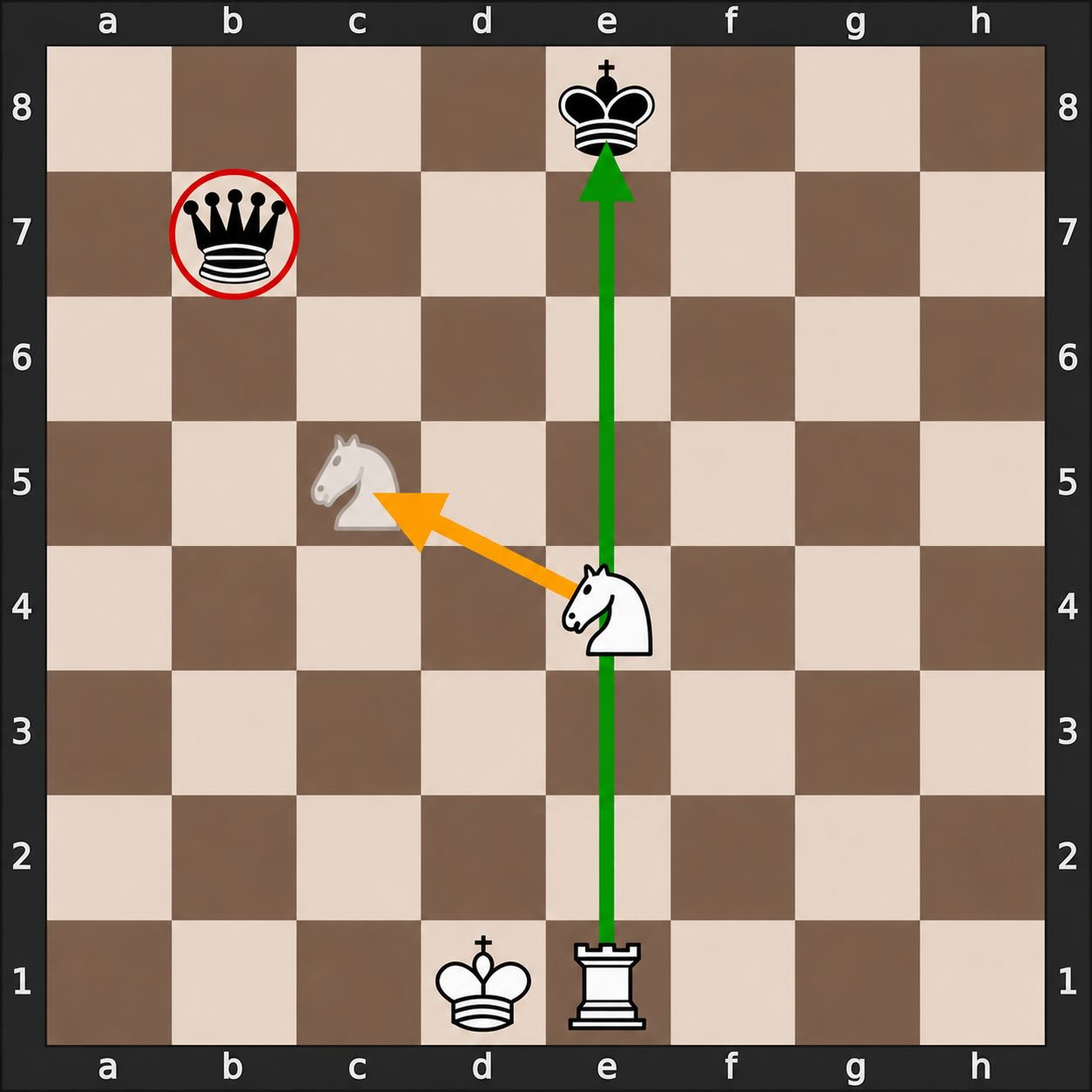
How to recognize it: Look for situations where one of your pieces is blocking the path of another. If you move the front piece to a useful square while the piece behind delivers check or attacks a valuable target, you have a discovered attack.
One of the most spectacular sequences of discovered attacks ever played comes from the Game of the Century — Bobby Fischer vs Donald Byrne, New York 1956. After sacrificing his queen on move 17, the 13-year-old Fischer unleashed a series of discovered checks and double checks that left Byrne completely helpless. Every knight move opened a new attack from the rook or bishop behind it — a textbook demonstration of how a discovered attack can generate unstoppable momentum:
View the full game on 365Chess →
5. The Back Rank Weakness
After castling, a king is usually safe behind its pawns — but those same pawns can become a trap. If a rook or queen reaches the back rank (rank 1 for White, rank 8 for Black), the king has nowhere to go and checkmate is delivered. This is a back rank mate, and it ends thousands of games at every level every day.
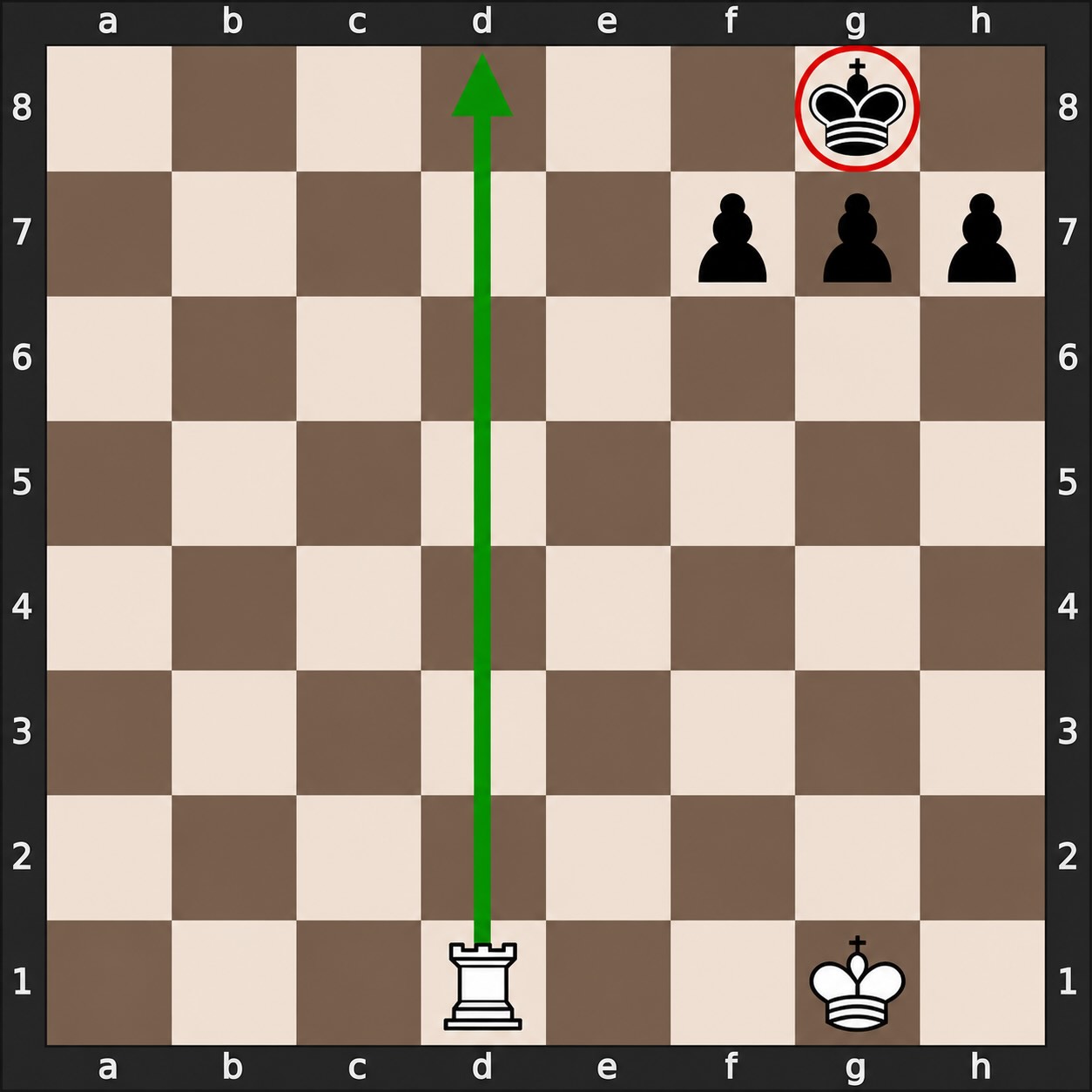
How to recognize the threat: Count the defenders of your back rank. If only your king and one rook guard the first rank, a single forcing move can overload that defense. When your opponent’s rook or queen is on an open file aimed at your back rank, always check if they can force entry.
How to prevent it: The simplest fix is to create a luft — a breath of air — by pushing one of the pawns in front of your king one square forward. This gives your king an escape square and removes the back rank threat entirely.
How to use it: Look for positions where your opponent has no back rank escape. Sacrificing material to force the rooks off or to keep the back rank closed is often worthwhile when a back rank mate is available.
The most instructive back rank combination ever played belongs to Paul Morphy. In Paris in 1858, with two rooks already active on open files, Morphy found Qb8+!! — a stunning queen sacrifice that forced the knight to capture, clearing the d-file for a devastating Rd8#. The combination is only three moves long, but every element of the back rank pattern is there: a queen sacrifice to deflect the only defender, and a rook delivering checkmate on the first rank with the enemy king trapped by its own pawns.
View the full game on 365Chess →
How to Improve Your Tactical Vision
Solve puzzles every day. Even 10 to 15 minutes of puzzle solving per day builds the pattern recognition that makes tactics feel automatic. The goal is not to calculate everything — it is to train your eye to immediately notice when a fork, pin, or discovered attack is available.
Analyze your own games. After each game, look for moments where a tactic was available — either one you missed, or one your opponent missed. These missed opportunities are the clearest signal of what to practice next.
Ask the right questions. Before each move: Is any of my opponent’s pieces undefended? Are any pieces lined up? Is their back rank weak? Could my king be forked? These quick checks catch most tactical opportunities before they disappear.
Practice Chess Tactics for Free
The fastest way to build tactical strength is to solve positions every day. 365Chess.com offers free chess puzzles at every difficulty level — from simple one-move forks to multi-move combinations. Each puzzle is taken from a real game, so every solution is a pattern that has appeared on the board in practice.
Solve free chess puzzles on 365Chess →
You can also use the 365Chess Analysis Board to review your own games and find the tactics you missed.
Frequently Asked Questions
What is the most important chess tactic to learn first?
The fork — specifically the knight fork. It appears constantly at every level of play and is responsible for more material wins in beginner and intermediate games than any other tactic.
What is the difference between a tactic and a strategy?
A tactic is a specific sequence of moves that produces an immediate, concrete result — usually material gain or checkmate. A strategy is a long-term plan: controlling the center, improving piece placement, creating a passed pawn.
How long does it take to get good at chess tactics?
Most players notice a meaningful improvement within a few weeks of daily puzzle practice. Reaching the level where basic patterns feel automatic takes a few months.
Can a pawn create a fork?
Yes. A pawn attacks two squares diagonally, so a pawn push can fork two pieces at once — and pawn forks are easy to miss precisely because pawns seem harmless.
What is a double attack?
A double attack is any move that creates two threats at once. A fork is a specific type of double attack where a single piece does the attacking. A discovered attack is another type — one piece moves while another delivers the second threat.
Read Also
10 Chess Opening Principles Every Player Should Know
Best Chess Openings for Beginners
How to Play Chess: Rules, Pieces and First Steps
En Passant: Rules, Examples and How It Works