
Looking for the best chess openings for beginners? The best openings for new players are usually simple, sound, and easy to understand. In this guide, you’ll learn 6 good chess openings for beginners, including 3 easy openings for White and 3 solid defenses for Black, that help you develop quickly, control the center, and play with confidence from the very first moves.
Chess Openings for Beginners – White
To start with, let’s review three good chess openings to play with White.
Italian Game
1.e4 e5 2.Nf3 Nc6 3.Bc4
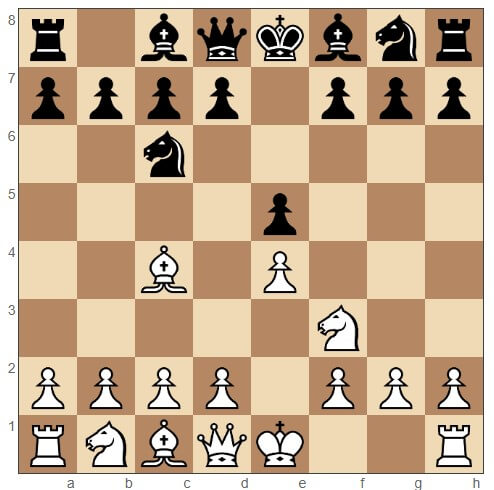
The Italian Game is probably the most beginner-friendly chess opening out there.
Even though it is a highly tactical opening, when you play the Italian you only have 2 or 3 main lines to learn, which makes it a very accessible opening.
The most played Italian Opening line goes like this:
1.e4 e5

One of the most played chess openings in the world. Both sides occupy the center with their e pawns.
2.Nf3 Nc6
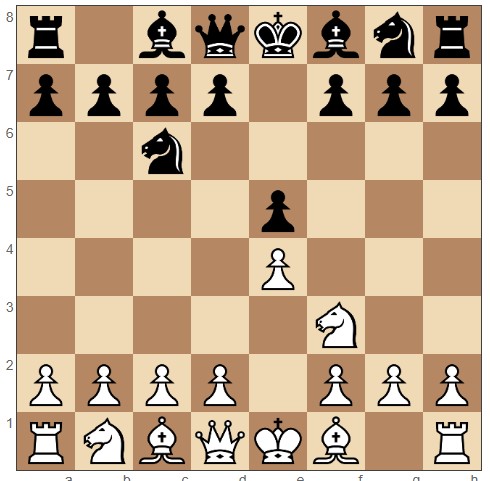
White threatens with taking the pawn, and Black defends.
3.Bc4 Bc5
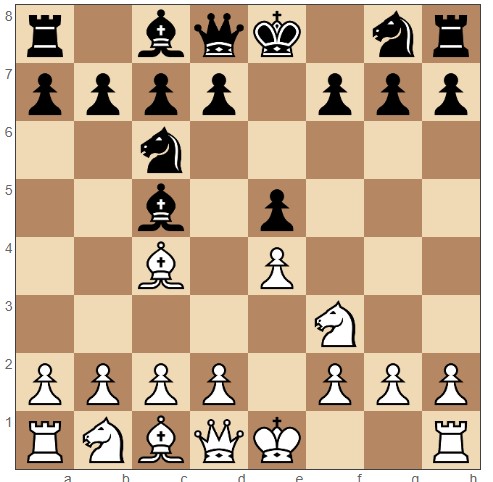
Natural development of both Bishops to the center of the board.
4.c3 Nf6
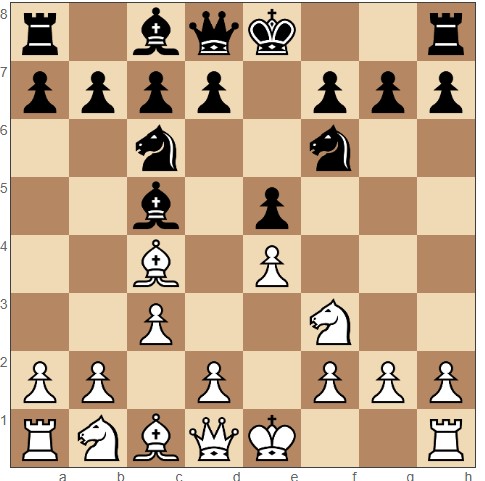
Quiet move by White, preparing to play d4 later. Black keeps developing their pieces.
5.d3 d6
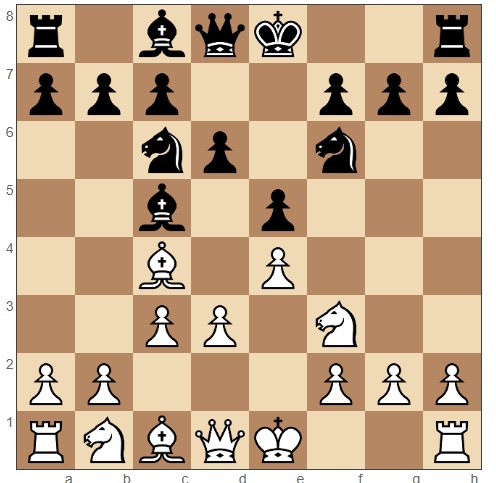
Another waiting move by White that supports the pawn on e4. The move 5…d6 by Black frees the light-squared Bishop.
6.O-O
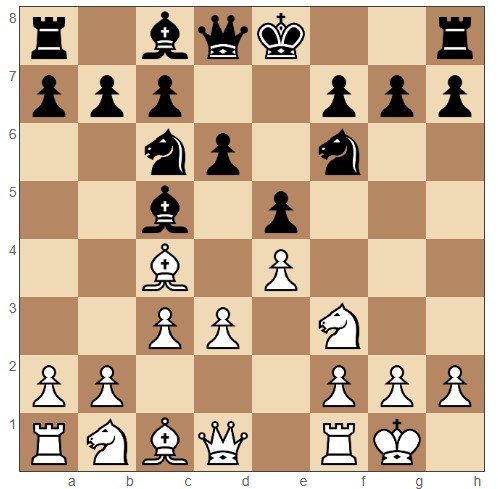
White finishes the first part of the opening with a short castle that puts the King in a safe spot.
London System
1.d4 d5 2.Bf4

The London System is another extremely easy-to-play chess opening for beginners because the player with White can pretty much play the same structure over and over again with good results.
Let’s take a look at the main line of the London System:
1.d4 d5
2.Bf4 Nf6
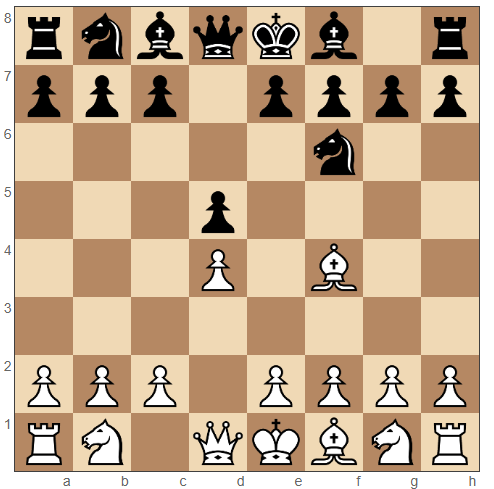
The deciding move for the London System is already in place: Bf4!
3.e3 c5
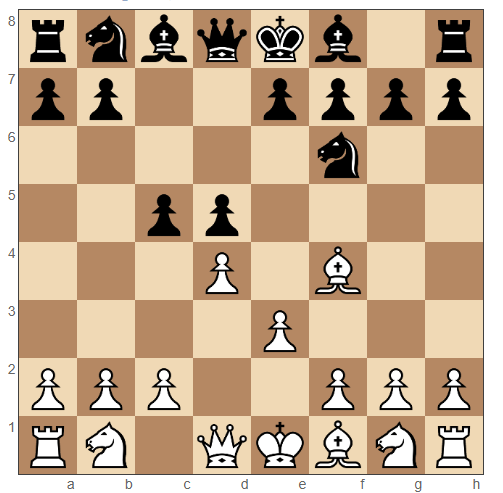
The move e3 opens up the diagonal for the light-squares Bishop, and Black decides to strike out in the center immediately with …c5.
4.c3 Nc6
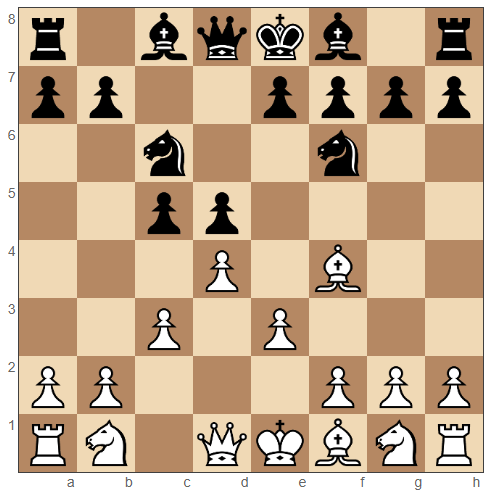
With c3, White supports the pawn on d4. Black keeps developing pieces.
5.Nd2 Bf5
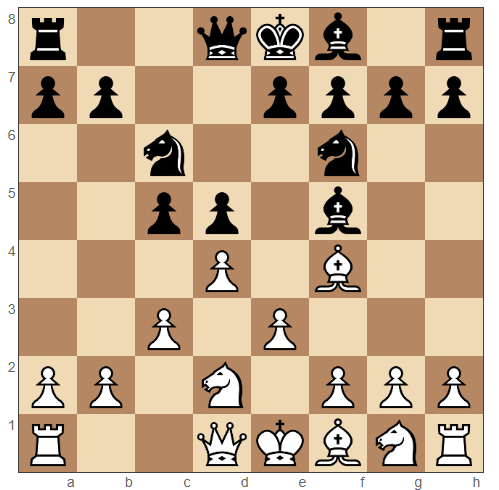
Black has decided to play a mirror move with …Bf5.
6.Ngf3 e6
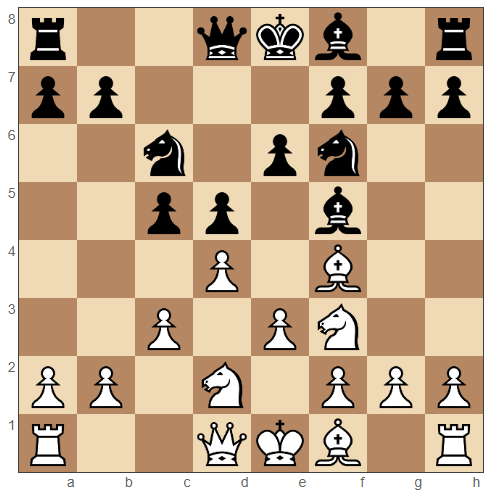
The first moves of the London System have already been played.
As we said earlier, White can play this same system against almost anything that Black decides to play, and there lies the true beauty of this chess opening, ideal for beginners.
King’s Indian Attack
1.Nf3 Nf6 2.g3 d5 3.Bg2
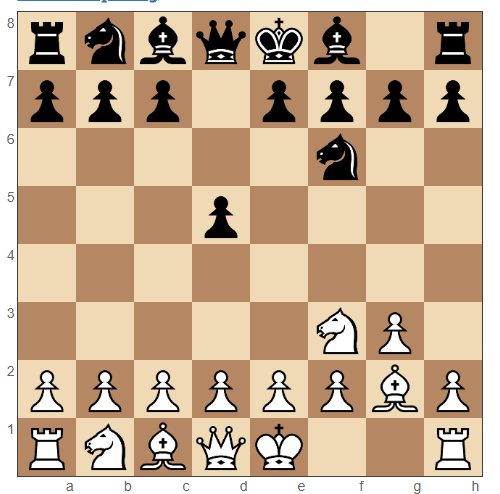
The King’s Indian Attack is another example of a chess opening for beginners that can be played vs virtually everything your opponents decide to do.
1.Nf3 Nf6
The move Nf3 is very flexible because it allows White to play a whole range of openings. In this case, we will play the King’s Indian Attack.
2.g3 d5
Now it is very apparent that White intentions are to play the KIA.
3.Bg2 c6
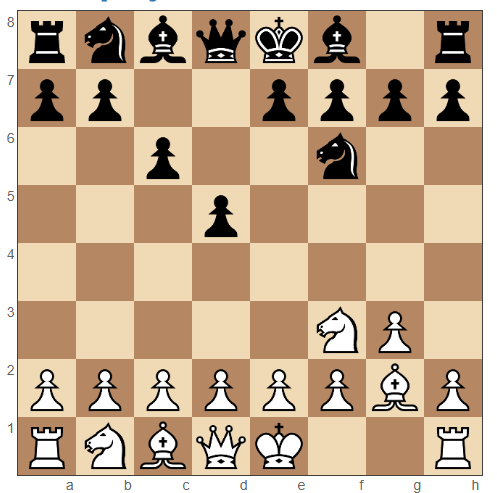
White prepares to castle, Black supports the pawn on d5.
4.O-O Bg4
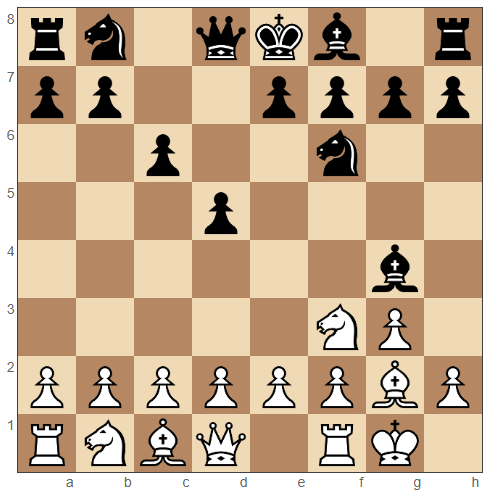
Before it’s too late, Black frees their light-squared Bishop.
5.d3 Nbd7
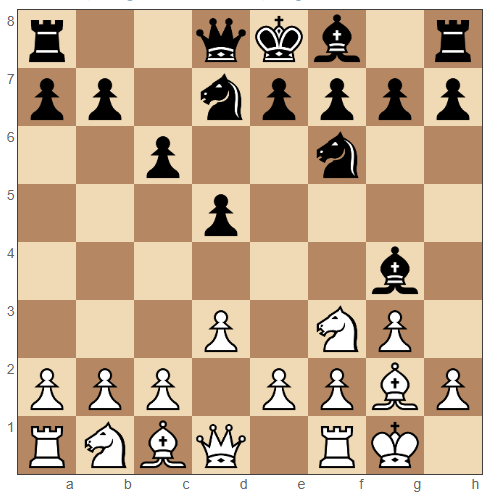
d3 and later Nbd2 are typical supporting moves in the King’s Indian Attack.
6.Nbd2 e5

White keeps developing and Black strikes out in the center.
7.e4
White responds to …e5 by playing e4 and challenging Black’s center.
Chess Openings for Beginners – Black
Now let’s review some of the best chess openings for beginners when playing with Black.
Scandinavian Defense
1.e4 d5
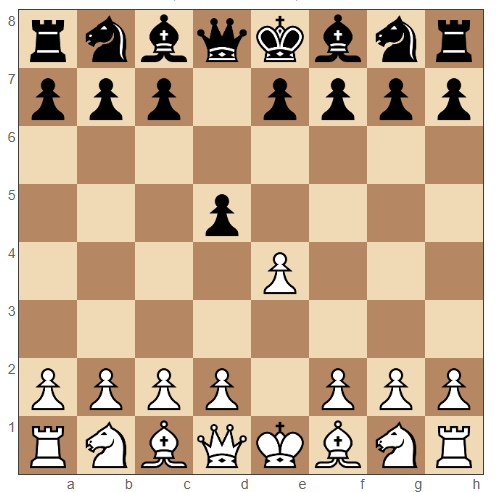
In the Scandinavian Defense, Black decides to immediately challenge the center with 1…d5, threatening White’s pawn on e4. This is a great chess opening for beginners because it forces the other player to come out of their comfort zone and play an opening that they are probably not used to.
2.exd5 Qxd5
White captures on d5, and Black immediately recaptures with the Queen. Yes, this breaks the classic rule of not moving the Queen early — but in the Scandinavian, it works. There are no pieces that can attack the Queen right away, so Black gets away with it.
3.Nc3 Qa5

White develops the Knight and attacks the Queen at the same time. The Queen retreats to a5, where it stays safe and keeps an eye on the c3 Knight.
4.d4 c6
White takes the center with d4. Black plays c6 — a key move that does two things: it prepares to bring the light-squared Bishop out, and it gives the Queen a safe retreat square on c7 if needed.
5.Bd2 Qc7
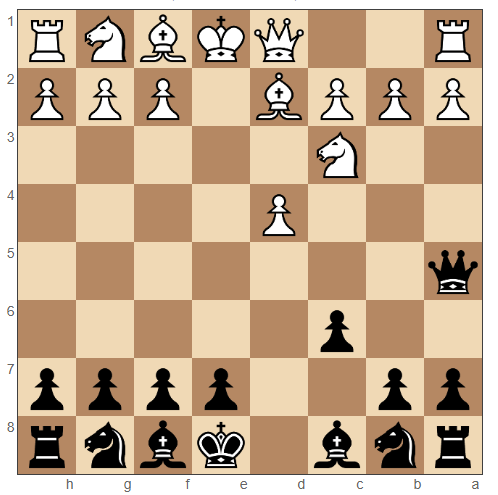
White develops the Bishop to d2. Black’s Queen retreats to c7 — a safe, active square where it supports Black’s future plans in the center. The position is completely equal and comfortable to play.
6.Nf3 Nf6
Both sides continue developing naturally. After Nf3 and Nf6, the game has reached a solid middlegame where Black has no weaknesses, all pieces ready to come out, and a clear plan ahead. This is what makes the Scandinavian so beginner-friendly: the first phase of the game is almost automatic.
Petroff Defense
1.e4 e5 2.Nf3 Nf6
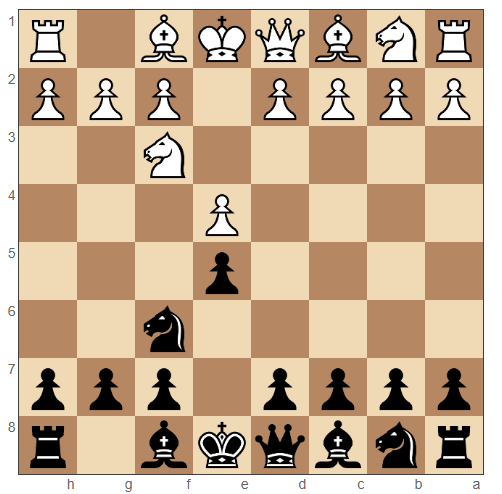
In the Petroff, Black mirrors White’s moves in the first moments of the game. Instead of defending the e5 pawn, Black counterattacks White’s pawn on e4. The message is simple: if you take my pawn, I’ll take yours.
3.Nxe5 d6 4.Nf3 Nxe4
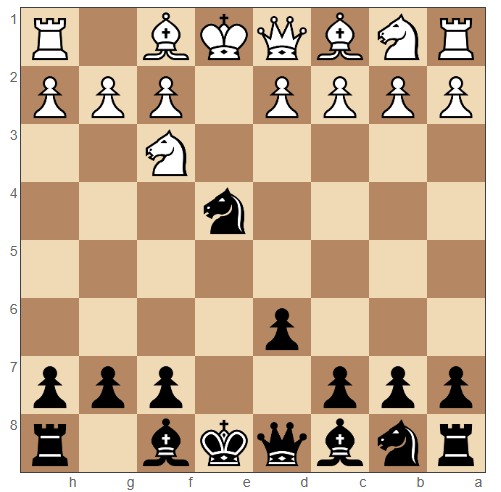
White takes on e5, but must retreat after Black plays d6. Then Black captures on e4. Both sides have exchanged pawns equally and the position is symmetrical — which is exactly what beginners playing Black want.
5.d4 d5
Both sides advance their d pawns to the center. The resulting position is fully balanced, with equal pawns, equal space, and equal development ahead.
6.Bd3 Nc6 7.O-O Be7
White develops the Bishop and castles. Black mirrors again: the Knight comes out to c6, the Bishop goes to e7, and on the next move Black will castle too. The game enters the middlegame with a solid, balanced position — no weaknesses, no surprises. This is the great advantage of the Petroff: it is almost impossible to get into trouble in the opening if you follow these natural moves.
Slav Defense
1.d4 d5 2.c4 c6

The Slav Defense is one of the best choices against the Queen’s Gambit. The key idea behind 2…c6 is simple: Black supports the d5 pawn without blocking the light-squared Bishop — which is a common headache in similar openings. This small detail makes the Slav one of the most reliable and practical defenses available to Black at any level.
3.Nc3 Nf6
White develops the Knight to c3. Black responds with Nf6 — a natural move that controls the e4 square and prepares to castle kingside.
4.Nf3 e6
White develops the second Knight. Black plays e6, entering the Semi-Slav — the simplest and most beginner-friendly version of this defense. The e6 pawn reinforces d5 and opens the diagonal for the dark-squared Bishop.
5.e3 Nbd7
White chooses a solid setup with e3. Black develops the Knight to d7, the best square from which it can support the center and eventually move to f8 or b6.
6.Bd3 Bd6
Both sides develop their Bishops. The position is solid and completely balanced — Black has no weaknesses, no cramped pieces, and a clear plan: castle, then decide how to fight back in the center.
7.O-O O-O
Both sides castle and complete their development. Black has achieved everything a beginner could want from an opening: a solid pawn structure, active pieces, a safe King, and no weaknesses. It is no surprise that the Slav Defense is used at every level of chess, from complete beginners to world champions.
Frequently Asked Questions
What is the easiest chess opening for beginners?
The Italian Game (1.e4 e5 2.Nf3 Nc6 3.Bc4) is widely considered the easiest chess opening for beginners. It follows all the basic principles — control the center, develop your pieces, castle early — and only requires learning 2 or 3 main lines. Players of all levels use it, from complete beginners to top grandmasters.
How many openings should a beginner learn?
One opening for White and one for Black is enough to start. Learning too many openings leads to confusion. Pick one simple system — like the Italian Game or London System for White — and one defense — like the Scandinavian or Slav for Black — and focus on understanding the ideas behind the moves rather than memorizing long variations.
Should beginners focus on chess openings?
Yes, but with the right priorities. Learning one or two reliable openings helps you avoid losing from the very first moves, but the biggest improvements for beginners come from studying tactics and basic endgames. The openings in this guide are designed to teach the right habits — control the center, develop pieces, castle early — that will serve you for your entire chess career.
What is the best first move in chess for beginners?
1.e4 is the best first move for beginners. It immediately takes control of the center, opens lines for the Queen and the light-squared Bishop, and leads to open, tactical positions where the basic principles of chess are easiest to apply. Many of the world’s top players, including Magnus Carlsen, have called 1.e4 “best by test.”
Other Articles
- How to Play Chess: A Beginner’s Guide to Mastery
- Chess Openings for White: Full Guide
- Queen’s Gambit Complete Guide