En passant is one of the most misunderstood rules in chess. It is a special pawn capture that can only happen in one very specific situation — and if you miss the moment, the opportunity is gone forever. This guide explains exactly when en passant applies, how to execute it, and what the rules say about it.
How En Passant Works
En passant happens when a pawn advances two squares from its starting position and lands beside an enemy pawn. In that moment, the enemy pawn has the right to capture it — not by moving to the square the pawn landed on, but by moving to the square the pawn passed through.
The name itself gives it away: en passant is French for “in passing.” The pawn is captured as if it had only moved one square.

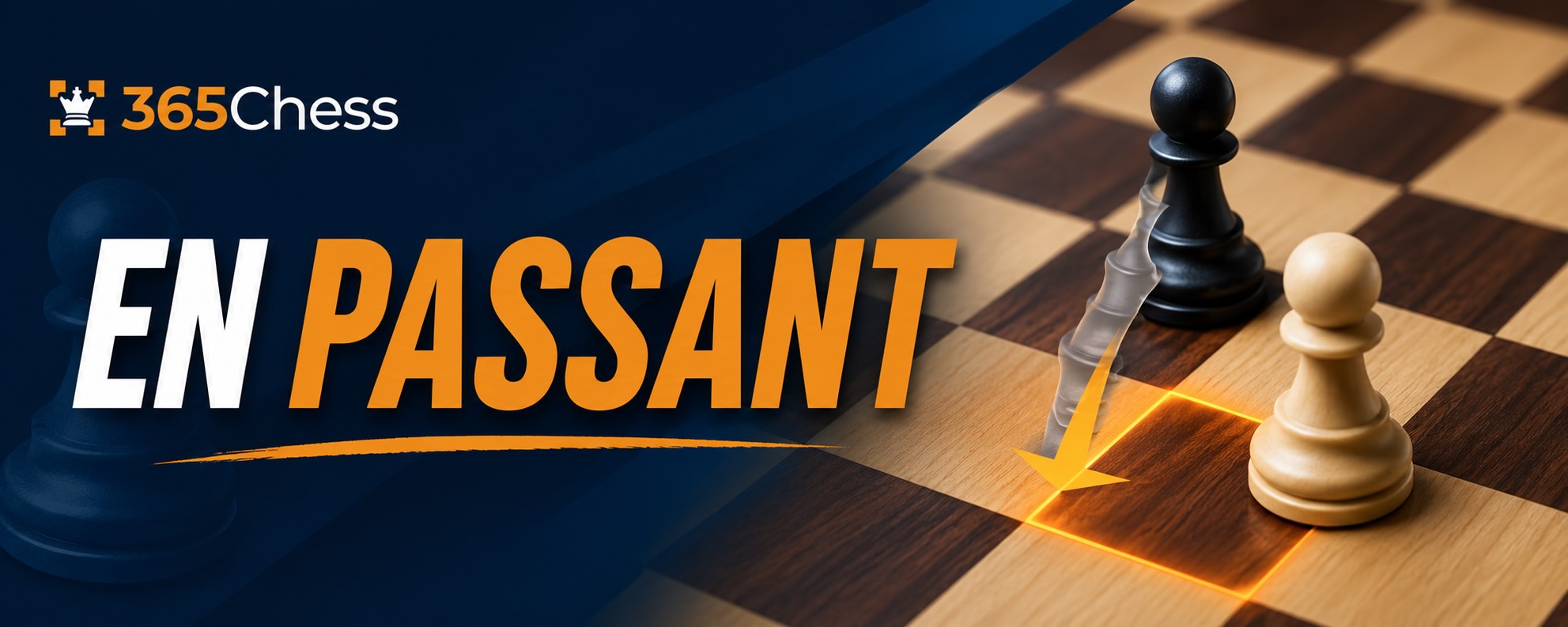
In the animation above, the black pawn advances two squares and lands beside White’s pawn. White immediately captures it en passant, landing on the square the black pawn skipped over — not the square it occupied.
The Rules of En Passant
En passant is only legal when all four of these conditions are met:
1. The enemy pawn must have just moved two squares. En passant can only be played in response to a two-square pawn advance. If the enemy pawn moved one square, or if it moved two squares on a previous turn, en passant is not allowed.
2. Your pawn must be on the fifth rank. The capturing pawn must already be on the fifth rank (rank 5 for White, rank 4 for Black). This means White can only capture en passant if the enemy pawn advanced from rank 7 to rank 5, landing right beside a White pawn on rank 5.
3. The pawns must be on adjacent files. The two pawns must be side by side — on neighboring files. A pawn cannot capture en passant if the enemy pawn is two files away.
4. You must capture immediately. En passant must be played on the very next move after the two-square advance. If you play any other move first, the right to capture en passant is permanently lost. You cannot come back to it later.
En Passant Example: Black Captures
En passant works the same way for both sides. Here is an example from Black’s perspective: White’s pawn advances two squares and lands beside Black’s pawn on the fourth rank. Black can capture it en passant, moving diagonally forward to the square White’s pawn passed through.
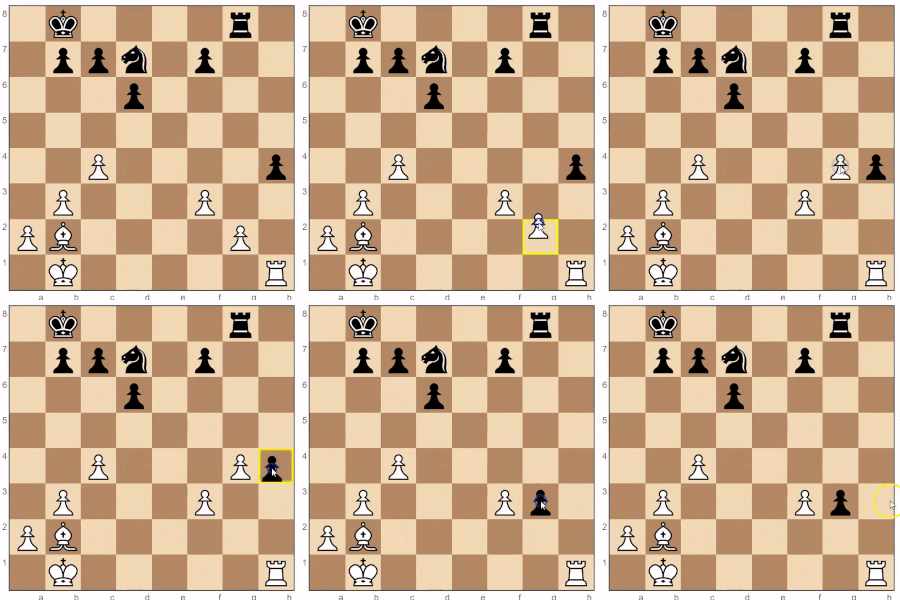
After the capture, Black’s pawn occupies the square White’s pawn passed over, and White’s pawn is removed from the board. The result is exactly the same as if White had only moved one square and Black had captured normally.
Is En Passant Mandatory?
No. En passant is always optional. You are never forced to capture en passant — it is simply a right you have in that position. If you prefer to make a different move, you can. But if you do not capture en passant immediately, the opportunity disappears permanently.
There is one rare exception: if en passant is the only legal move available to you in that position, then you must play it. But this is an extreme edge case that almost never occurs in practice.
Also worth noting: only pawns can capture or be captured en passant. No other piece — not the rook, not the queen, not the bishop — has this ability. It is exclusive to pawns.
En Passant Checkmate
It is even possible to deliver checkmate with an en passant capture — though it is extremely rare in real games. Here is an example:
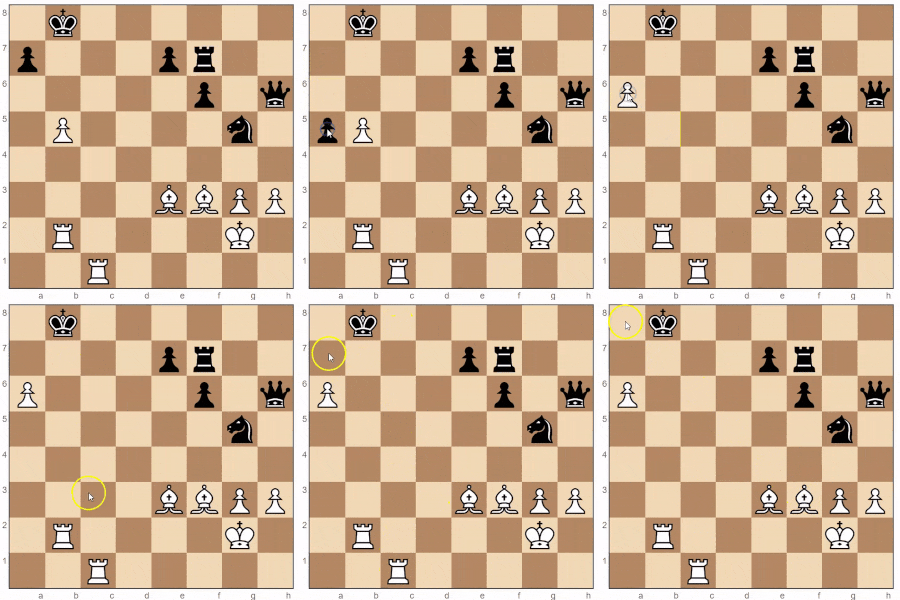
White captures the black pawn en passant and delivers checkmate at the same time. The en passant capture opens a line and exposes the Black king to a double check. This type of finish is one of the most surprising moments in chess.
En Passant in Chess Openings
En passant is not just an endgame or middlegame curiosity — it can appear as early as move 3 in theoretical opening lines. One well-known example occurs in the Scotch Game:
1.e4 e5 2.Nf3 Nc6 3.d4 exd4 4.Bc4 Nf6 5.e5 d5 6.exd6
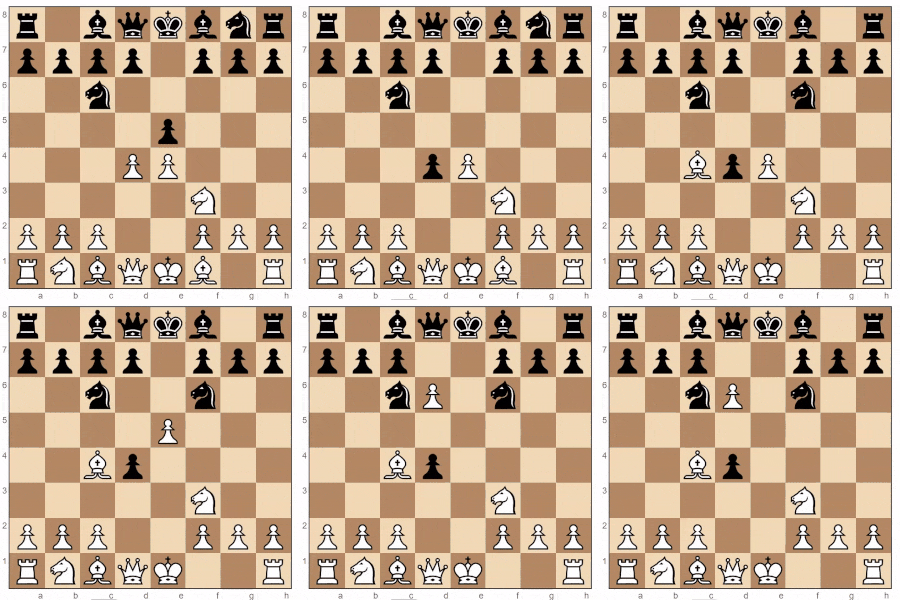
On move 6, White plays exd6 — an en passant capture. Black’s pawn had just advanced to d5, landing beside White’s pawn on e5. White takes it en passant, landing on d6. The position that results is one of the key tabiya positions in this variation of the Scotch Game.
En passant captures in openings are rare but important to know. Missing one — or falling victim to one — in the opening can change the pawn structure of the entire game.
Why Does En Passant Exist?
En passant was introduced to preserve the integrity of pawn battles after another rule was added to chess: the two-square advance on a pawn’s first move.
Before that rule existed, pawns could only move one square at a time. When the two-square advance was introduced — sometime between the 13th and 16th centuries — it created a loophole: a pawn could skip past an enemy pawn that was waiting to capture it, bypassing the confrontation entirely.
En passant was created to close that loophole. It ensures that no pawn can use its two-square advance to safely bypass an enemy pawn. The first documented references to en passant appear in the works of Ruy López de Segura, the 16th-century Spanish chess master whose name you might recognize from the Ruy López Opening.
En passant was one of the last major rules added to chess as we know it today — alongside the two-square pawn advance, pawn promotion, and castling.
Practice En Passant on 365Chess
The best way to get comfortable with en passant is to see it happen in real games. Use the Analysis Board to set up positions and test en passant captures yourself. If you want to practice the rule in action, try the Play vs Computer — the engine will always play en passant when it is the right move, so you will see it in context.
For more on the rules of chess, see our guides on how to set up a chess board and chess pieces: names, values, and moves.
Frequently Asked Questions
What does en passant mean?
En passant is a French phrase meaning “in passing.” In chess, it refers to the special pawn capture where a pawn takes an enemy pawn that has just advanced two squares, landing on the square the enemy pawn passed through — as if it had only moved one square.
Can you do en passant on any move?
No. En passant can only be played on the move immediately after the enemy pawn advances two squares. If you play any other move first, the right to capture en passant is permanently lost. There is no going back.
Can any piece capture en passant?
No. Only pawns can capture en passant, and only pawns can be captured en passant. The rook, knight, bishop, queen, and king do not have this ability. It is a rule that applies exclusively to pawns.
Is en passant a forced move?
No. En passant is optional — you are not required to capture even when you have the right to do so. You can choose to make a different move instead. The only exception is if en passant is the only legal move available to you in the position, which is extremely rare.
What rank does your pawn need to be on to capture en passant?
White’s pawn must be on the fifth rank (rank 5) to capture en passant. Black’s pawn must be on the fourth rank (rank 4). This is because en passant only occurs when an enemy pawn advances two squares from its starting position and lands beside your pawn — which is only possible when your pawn is already on the fifth rank for White, or the fourth rank for Black.