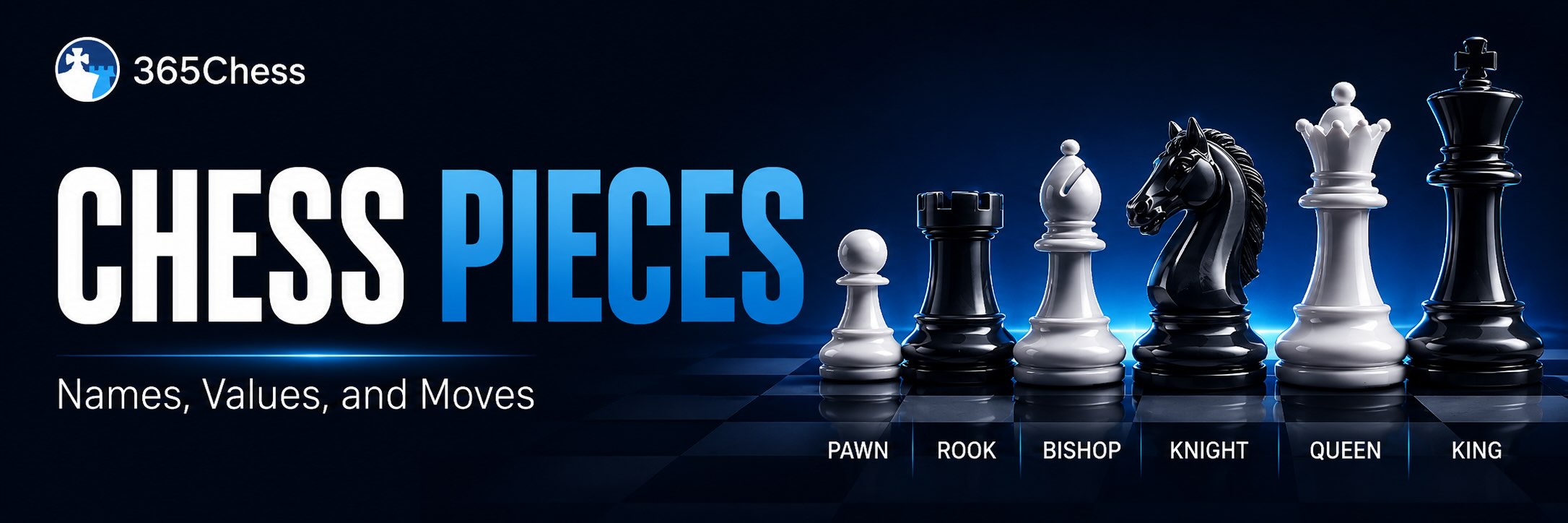
A standard chess game starts with 32 pieces — 16 per side. Each side has six different types of pieces: one king, one queen, two rooks, two bishops, two knights, and eight pawns.
In this guide you’ll learn the name of each chess piece, where it starts on the board, how it moves, and how much it’s worth.

The Chess Pieces: Quick Reference
| Piece | Per side | Value | Moves like |
|---|---|---|---|
| King | 1 | — | One square, any direction |
| Queen | 1 | 9 pts | Any number of squares, any direction |
| Rook | 2 | 5 pts | Any number of squares horizontally or vertically |
| Bishop | 2 | 3 pts | Any number of squares diagonally |
| Knight | 2 | 3 pts | L-shape (2 squares + 1 perpendicular) |
| Pawn | 8 | 1 pt | One square forward |
The King

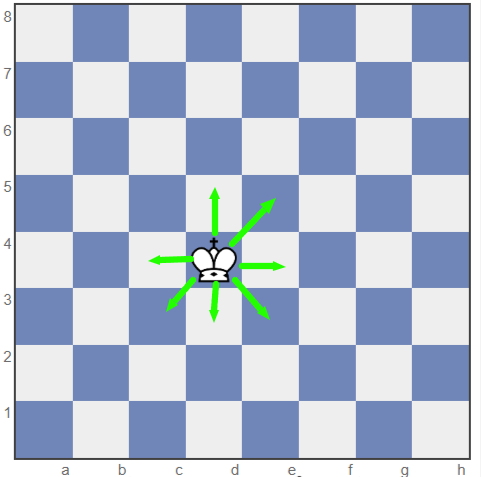
The king is the most important piece on the board. The goal of the game is to checkmate the opponent’s king — attacking it in a way it cannot escape. The king cannot move into a square that is under attack, and when it is attacked, the player must respond immediately.
Despite its importance, the king is not a powerful attacking piece in the middlegame. However, it becomes an active fighting piece in the endgame, where it should be brought to the center to support the remaining pawns and pieces.
Starting squares: e1 (White), e8 (Black)
Value: The king has no point value — it cannot be traded.
How it moves: One square in any direction: forward, backward, sideways, or diagonally.
The Queen

The queen is the most powerful piece in chess. It combines the movement of the rook and the bishop, giving it unmatched range and flexibility. Losing your queen early in the game is usually a decisive disadvantage.
Because of its power, the queen is often a target. Beginners sometimes bring it out too early, where it can be chased around and lose tempo. A well-timed queen deployment — usually after the minor pieces are developed — is a sign of good opening play.
Starting squares: d1 (White), d8 (Black)
Value: 9 points
How it moves: Any number of squares in any direction — horizontally, vertically, or diagonally.

The Rook
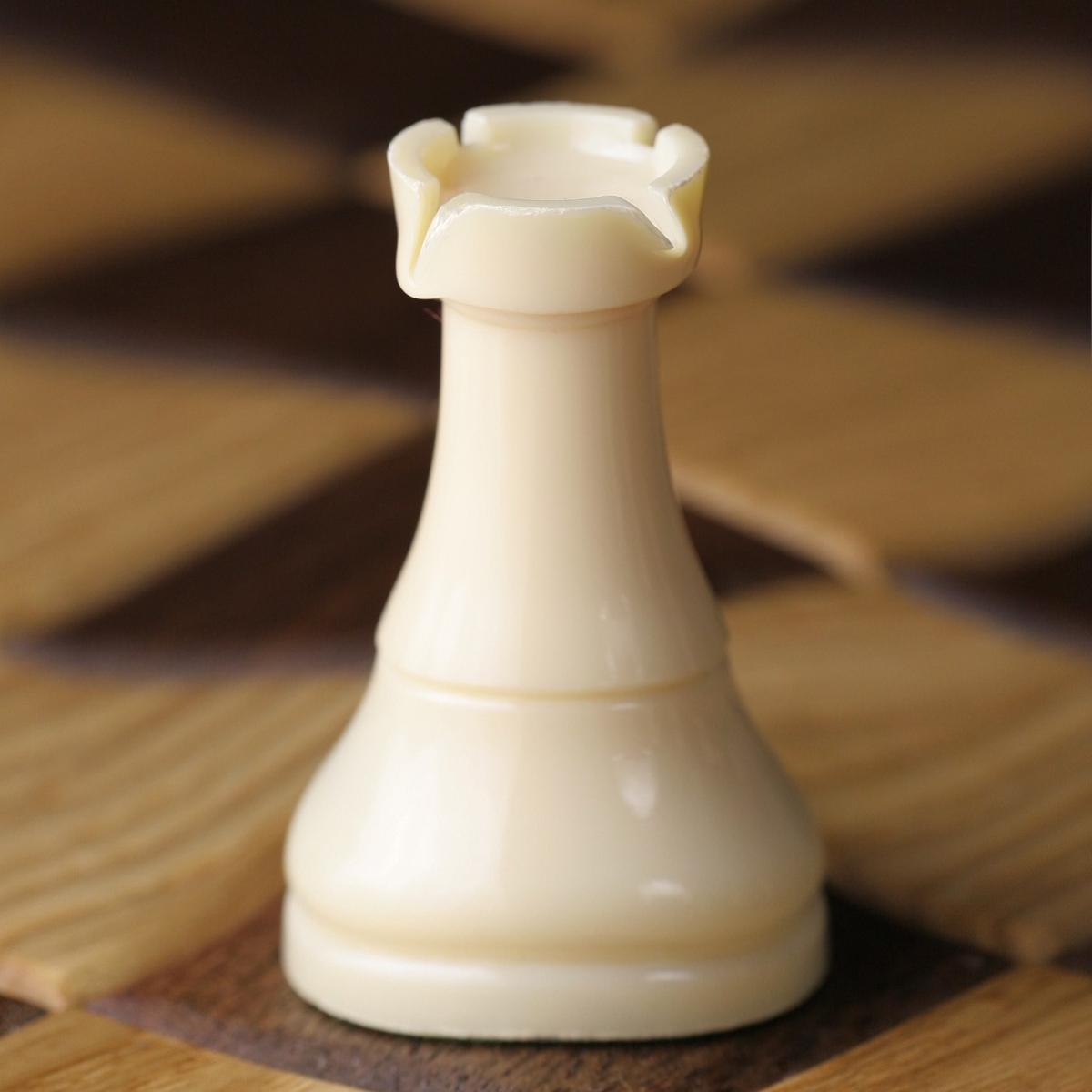
The rook is the second most valuable piece after the queen. It is most effective on open files — columns with no pawns blocking its path — where it can control the entire rank or file. Two rooks working together on the seventh rank are especially dangerous.
Rooks are considered major pieces (along with the queen). Unlike bishops and knights, they tend to be less active in the opening and become more powerful as pawns are exchanged and lines open up.
Starting squares: a1 and h1 (White), a8 and h8 (Black)
Value: 5 points
How it moves: Any number of squares horizontally or vertically. It moves in a “+” pattern.

The Bishop

Each side has two bishops — one on a light square, one on a dark square. Each bishop always stays on its original color for the entire game. This means that if you lose one bishop, you permanently lose control of all squares of that color.
Having both bishops — known as the “bishop pair” — is considered a small but real advantage, especially in open positions where the diagonals are clear. Bishops are considered minor pieces, equal in value to a knight, though in open positions they are often stronger.
Starting squares: c1 and f1 (White), c8 and f8 (Black)
Value: 3 points
How it moves: Any number of squares diagonally. It moves in an “X” pattern.

The Knight

The knight is the only piece that can jump over other pieces. This makes it uniquely useful in the early game and in closed positions where other pieces have limited mobility. It always lands on the opposite color square from where it started.
Knights are most powerful when placed on a strong central square — especially one that cannot be attacked by enemy pawns. A knight on the rim (edge of the board) has far fewer squares available and is generally weaker, which is why chess players say “a knight on the rim is dim.”
Starting squares: b1 and g1 (White), b8 and g8 (Black)
Value: 3 points
How it moves: In an L-shape — two squares in one direction, then one square perpendicular. It always lands on the opposite color from where it started.

The Pawn

Pawns are the weakest pieces individually, but they form the backbone of your position. Pawn structure — the arrangement of your pawns — determines whether your position is solid or full of weaknesses. A passed pawn (one with no opposing pawn blocking or capturing it) becomes increasingly dangerous as it approaches the other side of the board.
When a pawn reaches the opponent’s last rank, it promotes — it can become any piece the player chooses, almost always a queen. This potential makes even a single pawn a serious long-term threat.
Starting squares: All of rank 2 (White), all of rank 7 (Black)
Value: 1 point
How it moves: One square forward. On its first move it can advance two squares. Pawns capture diagonally, one square forward.

Chess Piece Values
Point values are a guide for evaluating trades — not absolute rules. A piece’s value changes depending on the position.
| Piece | Points |
|---|---|
| Queen | 9 |
| Rook | 5 |
| Bishop | 3 |
| Knight | 3 |
| Pawn | 1 |
| King | — |
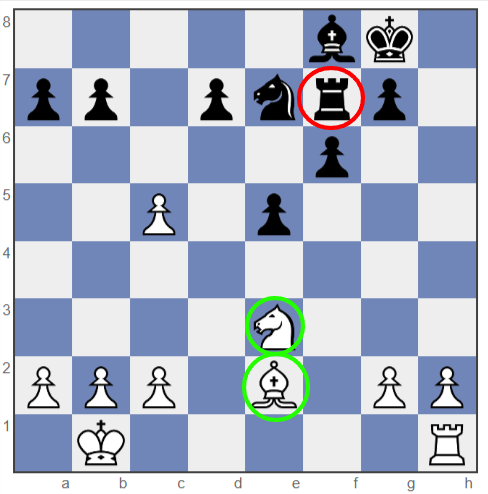
In the position above, the knight (3 pts) is worth more than the rook (5 pts) because the rook has no mobility while the knight controls the board freely. Always consider the position, not just the points.
Special Moves
- En passant — a special pawn capture that can only happen immediately after an opponent’s pawn advances two squares. Learn how en passant works →
- Castling — the only move where two pieces move at once: the king moves two squares toward a rook, and the rook jumps to the other side of the king. Learn how castling works →
- Promotion — when a pawn reaches the last rank it promotes to any piece (almost always a queen). Learn about pawn promotion →
How to Set Up the Board
Want to know where every piece goes before a game starts? See our complete guide: How to set up a chess board →