The Center Strategy Masterclass for Club Players
$37.00
What You Will Get in this Course

Video Lessons
This Course contains video lessons to guide you through its content.
Lessons' PGNs
Browse or download, with a beautiful and intuitive tool, the PGN files of the lessons in this course.Risk Free Purchase
90 Days Refund Guarantee
If for any reason you are not absolutely happy with the Course, we will refund the full amount of your purchase back to you. No questions asked!

Summary
Course Outline
- Introduction
- Chapter 1: Dominating the Center
- 1. Dominating the Center – Part I
- 2. Dominating the Center – Part II
- 3. Dominating the Center – Part III
- Chapter 2: Defensive Play
- 1. Defensive Play – Part I
- 2. Defensive Play – Part II
- Chapter 3: Mobile Center
- 1. Mobile Center: e4-d4 vs c6-e6 – Part I
- 2. Mobile Center: e4-d4 vs c6-e6 – Part II
- 3. Mobile Center: e4-d4 vs c6-e6 – Part III
- 4. Mobile Center: Undermining the Center – Part I
- 5. Mobile Center: Undermining the Center – Part II
- 6. Mobile Center: Undermining the Center – Part III
- 7. Mobile Center: e4-d4 vs e6 – Part I
- 8. Mobile Center: e4-d4 vs e6 – Part II
- 9. Mobile Center: e4-d4 vs e6 – Part III
- 10. Mobile Center: The e4-e5 Break – Part I
- 11. Mobile Center: The e4-e5 Break – Part II
- 12. Mobile Center: The e4-e5 Break – Part III
- Chapter 4: Symmetrical Center
- 1. Symmetrical Center: Initiative – Part I
- 2. Symmetrical Center: Initiative – Part II
- 3. Symmetrical Center: Outpost on e5/e4
- 4. Symmetrical Center: Counterplay
- Chapter 5: Open Center
- 1. Open Center: Initiative
- 2. Open Center: Piece Activity and Imbalances
- 3. Open Center: Provoking a Weakness
- 4. Open Center: Opening by Force – Part I
- 5. Open Center: Opening by Force – Part II
- 6. Open Center: Opening by Force – Part III
- 7. Open Center: Exchanging Pieces
- Chapter 6: Closed Center
- 1. Closed Center: Attack on the King – Part I
- 2. Closed Center: Attack on the King – Part II
- 3. Closed Center: Attack on the King – Part III
- 4. Closed Center: Attack on the Same Wing
- 5. Closed Center: Opening the Position
- Chapter 7: Static Center
- 1. Static Center: Attacking Weaknesses – Part I
- 2. Static Center: Attacking Weaknesses – Part II
- 3. Static Center: Counterplay
- 4. Static Center: Changing the Type of Center
- 5. Static Center: Improving Pieces
- Chapter 8: Dynamic Center
- 1. Dynamic Center: Changing the Type of Center – Part I
- 2. Dynamic Center: Changing the Type of Center – Part II
- 3. Dynamic Center: Sicilian Dynamics – Part I
- 4. Dynamic Center: Sicilian Dynamics – Part II
Master the Center and Take Command of the Middlegame
Every chess player knows that the center is important. But very few club players truly understand what to do with it once the pieces are developed.
Should you push your central pawns forward or keep the tension? Should you open the position or keep it closed? Should you attack on the kingside, expand on the queenside, improve your pieces, undermine your opponent’s structure, or change the character of the position completely?
In The Center Strategy Masterclass for Club Players, IM Mat Kolosowski gives you a practical and structured guide to one of the most important strategic themes in chess: central control.
Mat starts from a simple but powerful idea: when you dominate the center, your pieces gain more space, freedom, and flexibility. You can switch play from one side of the board to the other, create pressure in several areas, restrict your opponent’s options, and often force them into uncomfortable defensive decisions.
But this course is not just about “putting pawns on e4 and d4.” It is about understanding the type of center you have, the plans that belong to it, and the moments when you must transform one kind of advantage into another.
By learning the rules behind each type of center, you will be able to define the structure in front of you and choose the right plan with more confidence.
Across 42 lessons and 7 hours and 45 minutes of video, IM Mat Kolosowski shows how different central structures shape the entire middlegame.
You will learn how to:
- Dominate the Center
See how a strong pawn center can give your pieces natural squares, restrict your opponent’s development, and create practical pressure right from the opening. Mat demonstrates why allowing your opponent too much central control can quickly lead to a difficult or even collapsing position. - How to Stop Your Opponent’s Central Expansion
Central strategy is not only about building a powerful center yourself. Sometimes your opponent is the one trying to advance, expand, and take over the board with mobile central pawns. In this section, Mat shows how to defend with purpose: anticipating your opponent’s pawn breaks, controlling the key squares they need, blockading their central pawns, and turning their ambitious expansion into long-term weaknesses you can attack. - Handle Mobile Centers
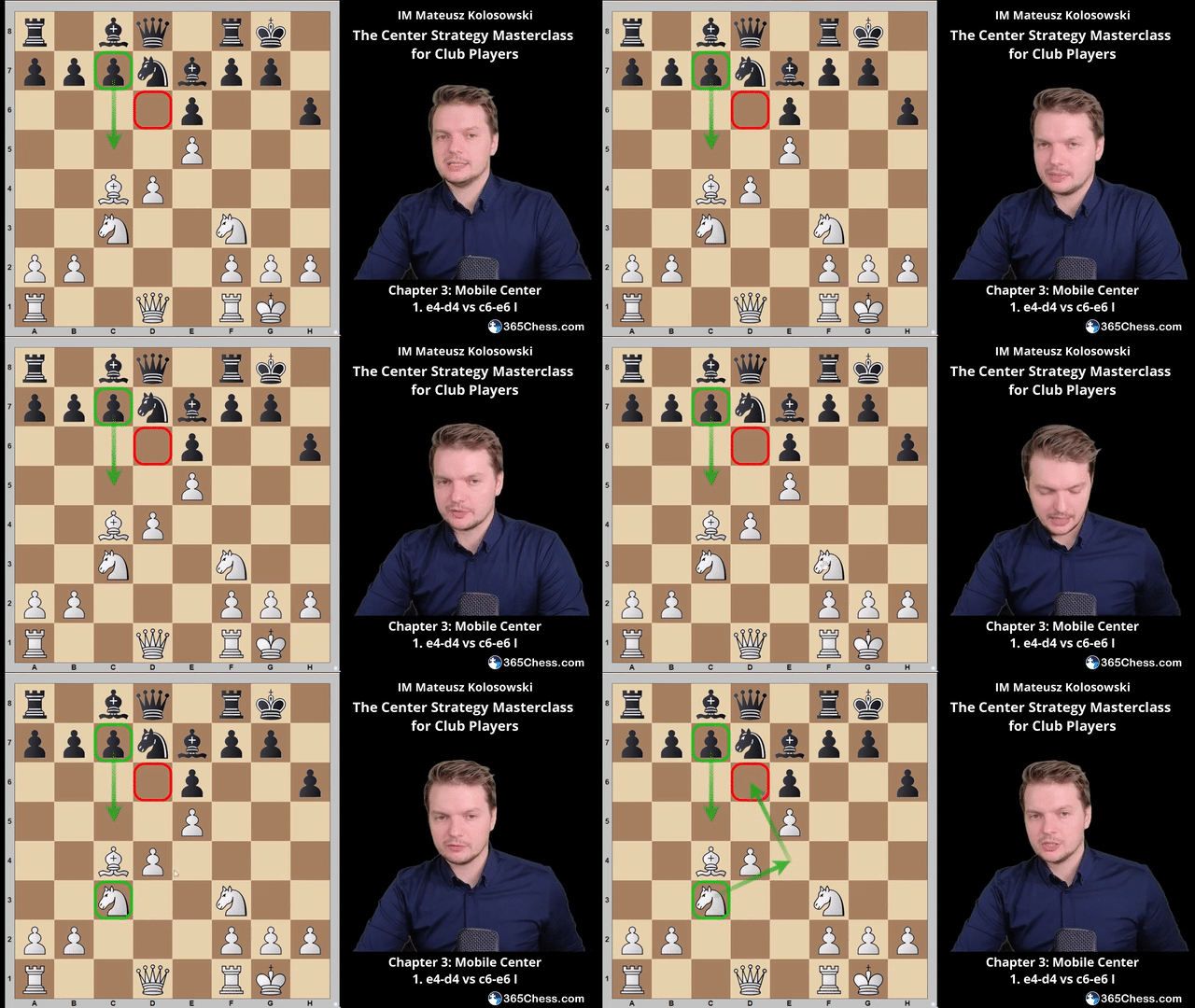
Study positions where central pawns can advance, transform, or steamroll the opponent. You will learn how to use pawn breaks such as e4-e5, how to undermine strong pawn centers, and how to convert central space into active piece play.
- Play Symmetrical Centers Better
Symmetrical structures may look quiet, but they often contain deep strategic ideas. Mat explains how initiative, outposts on e5/e4, and precise counterplay can make the difference between a harmless position and a serious advantage. - Use Open Centers to Create Activity
When the center opens, piece activity becomes critical. You will learn how to use initiative, imbalances, weaknesses, forced openings of the position, and exchanges to take control before your opponent can consolidate. - Attack in Closed Centers
When the center is locked, the game usually shifts to the wings. Mat shows how to understand which side of the board to play on, how to prepare attacks on the king, how to expand on the same wing, and when to open the position at the right moment.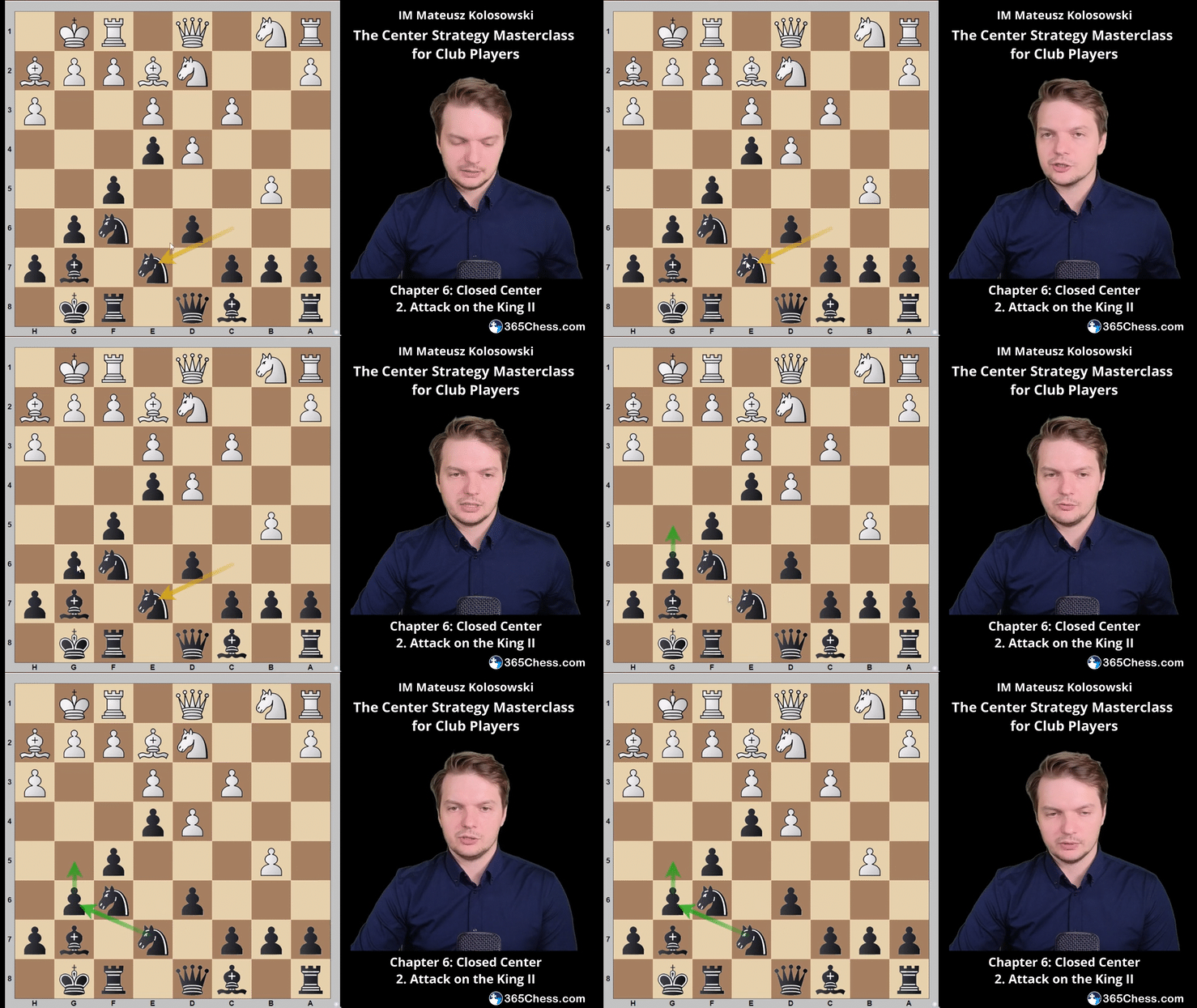
- Exploit Static Centers
Static pawn structures often revolve around long-term weaknesses, isolated pawns, and piece improvement. You will learn how to attack weaknesses, generate counterplay, improve your pieces, and even change the type of center when the position demands it. - Navigate Dynamic Centers
Some positions cannot be judged by structure alone. In dynamic centers, timing, activity, pawn breaks, and tactical resources are everything. Mat covers how to change the nature of the position and explains typical Sicilian-style dynamics where static weaknesses may be outweighed by active possibilities.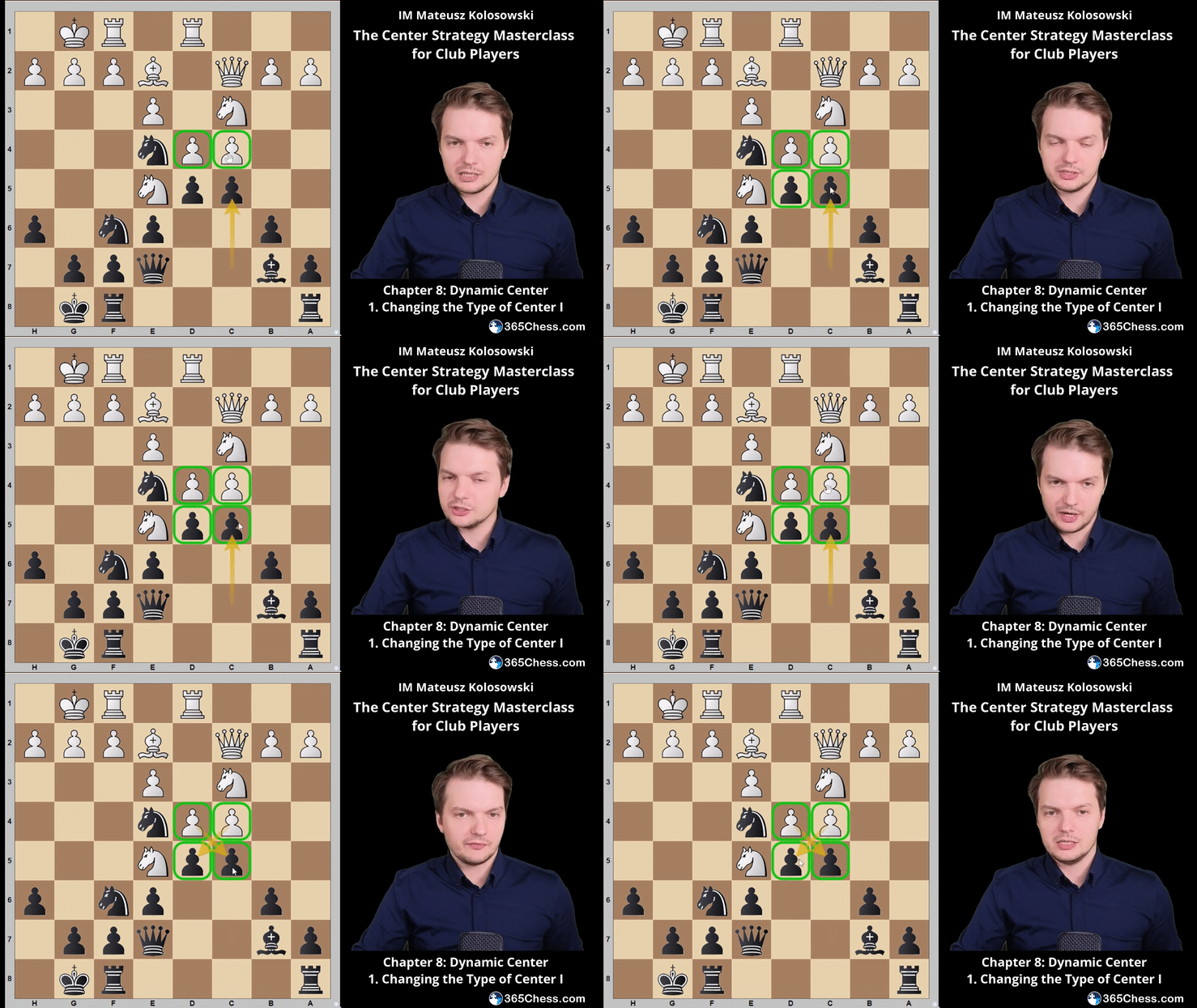
Throughout the course, Mat uses instructive examples from his own practice, classical games, and modern elite chess. You will see ideas from great players such as Alekhine, Botvinnik, Keres, Wei Yi, Bluebaum, Sindarov, and others, always with the goal of making the strategic concepts clear and useful for practical play.
The course includes 42 lesson PGNs, available through the 365Chess game viewer, so you can follow every example on the board, review the critical moments, and return to the positions whenever you want.
If you often reach the middlegame and are not sure whether to attack, defend, exchange, push, break, or improve your pieces, this course will give you a clearer way to think.
By the end of the course, you will not only know that the center matters. You will know how to use it to make better decisions, restrict your opponent, activate your pieces, and take control of the game.
Outline:
Chapter 1: Dominating the Center
1. Dominating the Center – Part I
2. Dominating the Center – Part II
3. Dominating the Center – Part III
Chapter 2: Defensive Play
1. Defensive Play – Part I
2. Defensive Play – Part II
Chapter 3: Mobile Center
1. Mobile Center: e4-d4 vs c6-e6 – Part I
2. Mobile Center: e4-d4 vs c6-e6 – Part II
3. Mobile Center: e4-d4 vs c6-e6 – Part III
4. Mobile Center: Undermining the Center – Part I
5. Mobile Center: Undermining the Center – Part II
6. Mobile Center: Undermining the Center – Part III
7. Mobile Center: e4-d4 vs e6 – Part I
8. Mobile Center: e4-d4 vs e6 – Part II
9. Mobile Center: e4-d4 vs e6 – Part III
10. Mobile Center: The e4-e5 Break – Part I
11. Mobile Center: The e4-e5 Break – Part II
12. Mobile Center: The e4-e5 Break – Part III
Chapter 4: Symmetrical Center
1. Symmetrical Center: Initiative – Part I
2. Symmetrical Center: Initiative – Part II
3. Symmetrical Center: Outpost on e5/e4
4. Symmetrical Center: Counterplay
Chapter 5: Open Center
1. Open Center: Initiative
2. Open Center: Piece Activity and Imbalances
3. Open Center: Provoking a Weakness
4. Open Center: Opening by Force – Part I
5. Open Center: Opening by Force – Part II
6. Open Center: Opening by Force – Part III
7. Open Center: Exchanging Pieces
Chapter 6: Closed Center
1. Closed Center: Attack on the King – Part I
2. Closed Center: Attack on the King – Part II
3. Closed Center: Attack on the King – Part III
4. Closed Center: Attack on the Same Wing
5. Closed Center: Opening the Position
Chapter 7: Static Center
1. Static Center: Attacking Weaknesses – Part I
2. Static Center: Attacking Weaknesses – Part II
3. Static Center: Counterplay
4. Static Center: Changing the Type of Center
5. Static Center: Improving Pieces
Chapter 8: Dynamic Center
1. Dynamic Center: Changing the Type of Center – Part I
2. Dynamic Center: Changing the Type of Center – Part II
3. Dynamic Center: Sicilian Dynamics – Part I
4. Dynamic Center: Sicilian Dynamics – Part II
About the Instructor
IM Mat Kolosowski is an International Master from Poland and an experienced coach known for his clear, practical approach to chess improvement. His lessons focus on helping players understand why plans work, not just memorizing moves. In this course, Mat brings that same structured teaching style to one of the most important areas of practical chess: the center. Drawing on instructive examples from classical games, modern elite practice, and his own experience, he explains how different central structures lead to different middlegame plans, helping club players make better decisions with more confidence.