Middlegame Masterclass with IM William Paschall
$79.99
What You Will Get in this Course

Video Lessons
This Course contains video lessons to guide you through its content.
Lessons' PGNs
Browse or download, with a beautiful and intuitive tool, the PGN files of the lessons in this course.Risk Free Purchase
90 Days Refund Guarantee
If for any reason you are not absolutely happy with the Course, we will refund the full amount of your purchase back to you. No questions asked!

Summary
Course Outline
- Lesson 1 Pawn structure – Isolated Queen’s Pawn
- Lesson 2 Pawn structure – Hanging Pawns
- Lesson 3 Minority Attack
- Lesson 4 Central Pawn Preponderance
- Lesson 5 Weak squares – Complexes
- Lesson 6 Outposts
- Lesson 7 Blockade – Nimzowitsch
- Lesson 8 Closed positions
- Lesson 9 Pawn breaks
- Lesson 10 Coordination of Pieces and Pawns
- Lesson 11 Bad Pieces I – Bad Bishops
- Lesson 12 Bad Pieces II – Bad Knights
- Lesson 13 Knights vs. Bishops
- Lesson 14 Coordination of Pieces
- Lesson 15 Space Advantage
- Lesson 16 When to exchange – avoid exchanges
- Lesson 17 When to exchange Queens
- Lesson 18 Open Positions
- Lesson 19 King Safety
- Lesson 20 The Bishop pair
It is not a secret that the majority of the games are decided in the middlegame. Nevertheless, most chess players focus on everything else but not on the middlegame itself. They study openings, drill tactics and memorize the endings…
Wouldn’t it make more sense to focus on something that actually decides most of the games?
Indeed. But there is a problem…
While openings and tactics are relatively easy to train, the middlegame is very different. It’s not enough to just solve many problems or to memorize the lines… To become a strong middlegame player you need to have a good grasp on fundamental principles. Things get harder because most pieces are still on the board. Thus, memorization isn’t an option.
Middlegame masterclass with IM Paschall is a 10-hour video course covering “everything middlegame” for under 2200 rated player must know.
It allows players to get an instant edge in the middlegame by following the correct plan, precisely utilizing the fundamental principles of the game and making sound decisions. Even when the positions are complex and unclear it is possible to break it down into the easy-to-understand parts and proceed with the strongest continuation [don’t worry, you will learn how].
We will start learning the static concepts and work our way to the dynamic ones. In the first several chapters we will start with pawn structure, then continue with strategic concepts laid out by Nimzowitsch, and then proceed with coordination of pieces and pawns, space advantage, exchanges, king’s safety and so on.
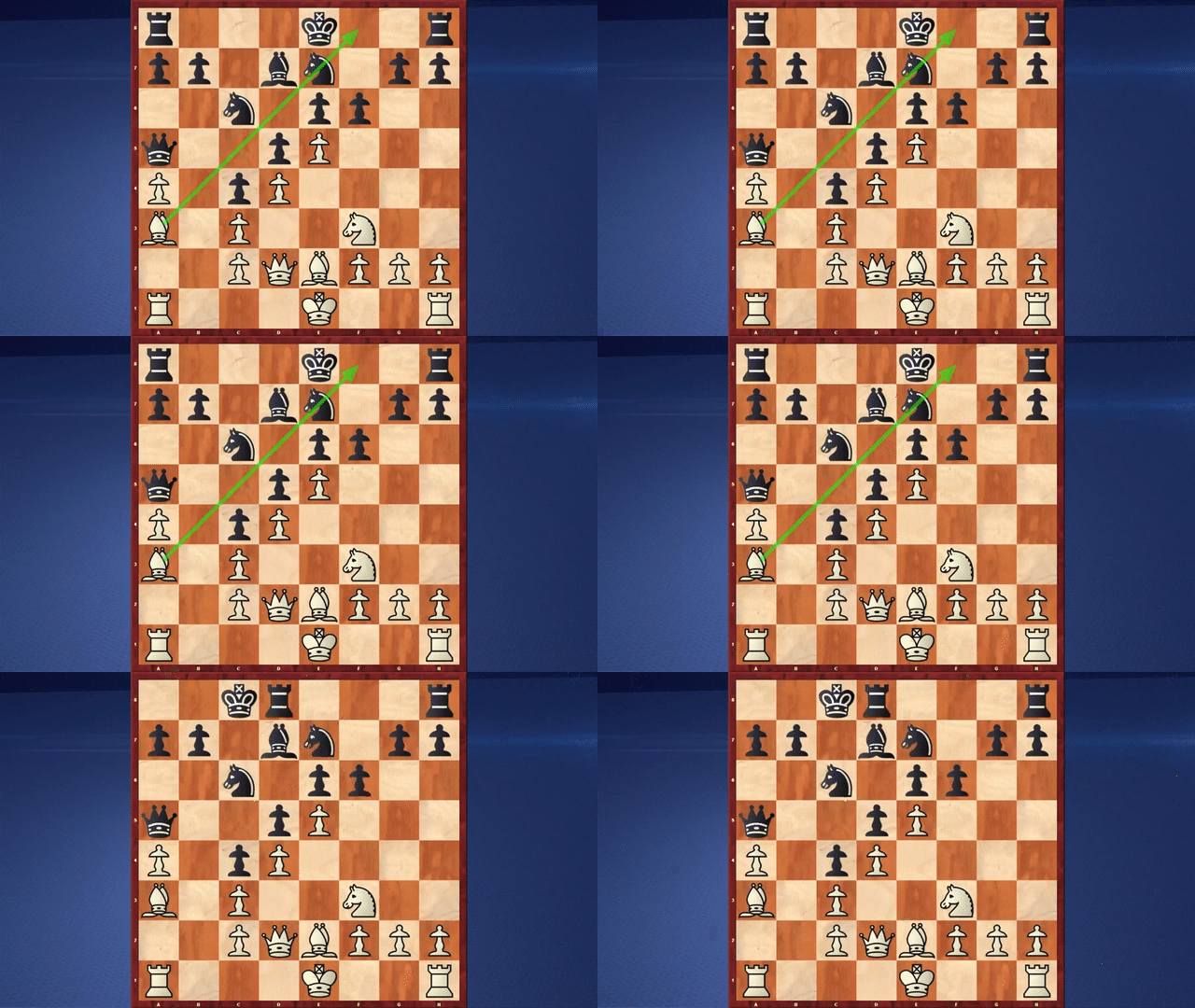
While your opponent stares at the board trying to figure out why he is losing, you can relax and just enjoy the game. The question won’t be whether you can win or not… but rather how soon that will happen.
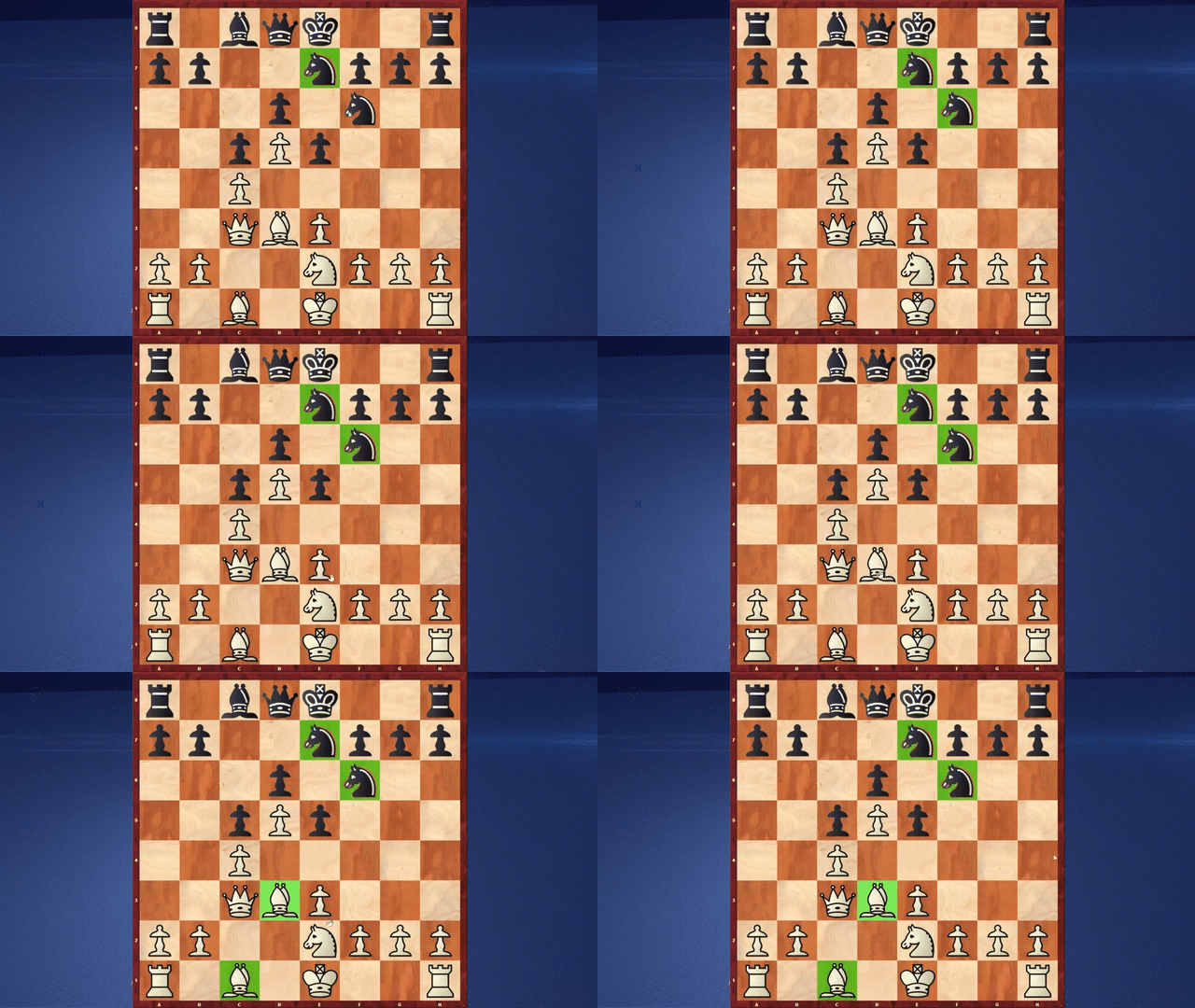
Trust me it is a much better position to be in! It does not just take the stress out of your game, but also gives you an instant confidence booster. Let’s get started.
IM William Paschall (FIDE 2514)
currently resides in Budapest, Hungary. Bill was the Boylston Chess Club Champion 2002, finished 1st at the Foxwoods Open 2002, Two-Time New England Open Champion, and has defeated more than 20 GM’s in tournament play. Bill has extensive experience training both adults and children privately and in the schools.
Contents:
- Lesson 1 Pawn structure – Isolated Queen’s Pawn
- Lesson 2 Pawn structure – Hanging Pawns
- Lesson 3 Minority Attack
- Lesson 4 Central Pawn Preponderance
- Lesson 5 Weak squares – Complexes
- Lesson 6 Outposts
- Lesson 7 Blockade – Nimzowitsch
- Lesson 8 Closed positions
- Lesson 9 Pawn breaks
- Lesson 10 Coordination of Pieces and Pawns
- Lesson 11 Bad Pieces I – Bad Bishops
- Lesson 12 Bad Pieces II – Bad Knights
- Lesson 13 Knights vs. Bishops
- Lesson 14 Coordination of Pieces
- Lesson 15 Space Advantage
- Lesson 16 When to exchange – avoid exchanges
- Lesson 17 When to exchange Queens
- Lesson 18 Open Positions
- Lesson 19 King Safety
- Lesson 20 The Bishop pair