The Vienna Game is a variation of the King's Pawn Opening that arises after the moves 1.e4 e5 2.Nc3. While significantly less common than the popular 2.Nf3, 2.Nc3 is played in only a small number of high-level matches. This rarity makes the Vienna Game an intriguing choice for players looking to take their opponents out of familiar territory early on.
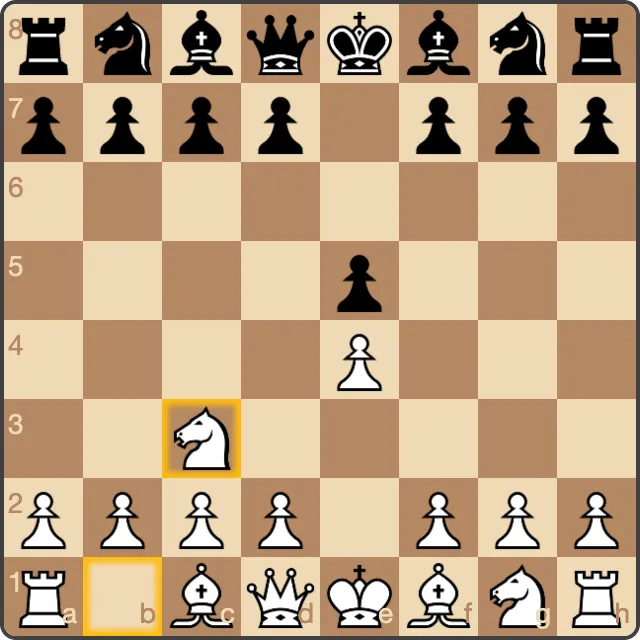
At first glance, 2.Nc3 is a quiet and non-aggressive move. It doesn't immediately challenge Black but offers flexibility in White's development. One of the key ideas behind this move is preparing for the aggressive 3.f4, leading to the Vienna Gambit. This line allows White to seize the initiative and open lines for a swift attack.
However, White isn't obligated to pursue an aggressive approach. The Vienna Game can transpose into more subdued openings, such as the Petrov Three Knights Game or even the Four Knights Game. This flexibility means the Vienna Game has something to offer both aggressive and positional players.
Historically, the Vienna Game dates back to the second half of the 19th century during the Romantic era of chess, when bold and attacking play was the norm. At that time, 2.Nc3 was often employed to set up 3.f4, aligning with the aggressive spirit of the period. About a century later, the opening saw a resurgence when Grandmaster Bent Larsen adopted a quieter approach in the 1950s and 1960s, favoring 3.Bc4 to develop smoothly while keeping options open.
Opening Moves and Main Lines
After the initial moves: 1. e4 e5 2. Nc3
Black has several options. One common response is: 2... Nf6
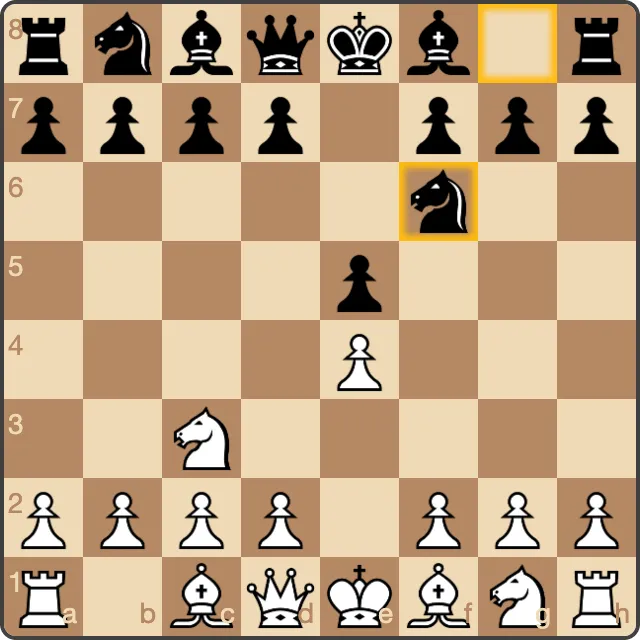
This leads to the Vienna Game: Falkbeer Variation, where the game can proceed with: 3. Bc4
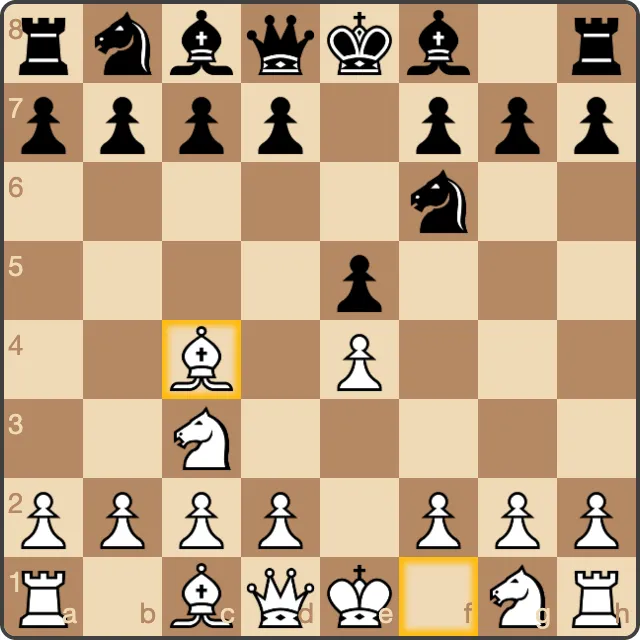
Alternatively, White can opt for the aggressive Vienna Gambit with: 3. f4
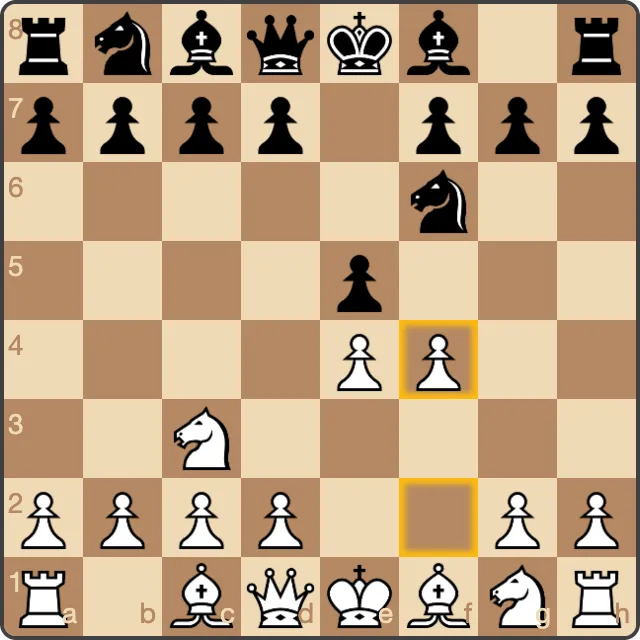
This move challenges Black's central pawn on e5 and can lead to dynamic play.
Key Strategies and Ideas
- Control of the Center: By playing Nc3, White supports the pawn on e4 and prepares for possible central expansions.
- Flexible Development: The Vienna Game allows for various setups, including fianchettoing the bishop or launching an early kingside attack.
- Surprise Value: Not as commonly played as other openings, the Vienna Game can catch opponents off-guard.
Common Traps and Pitfalls
One famous trap in the Vienna Game is the Frankenstein-Dracula Variation, which arises after:
1. e4 e5 2. Nc3 Nf6 3. Bc4 Nxe4 4. Qh5
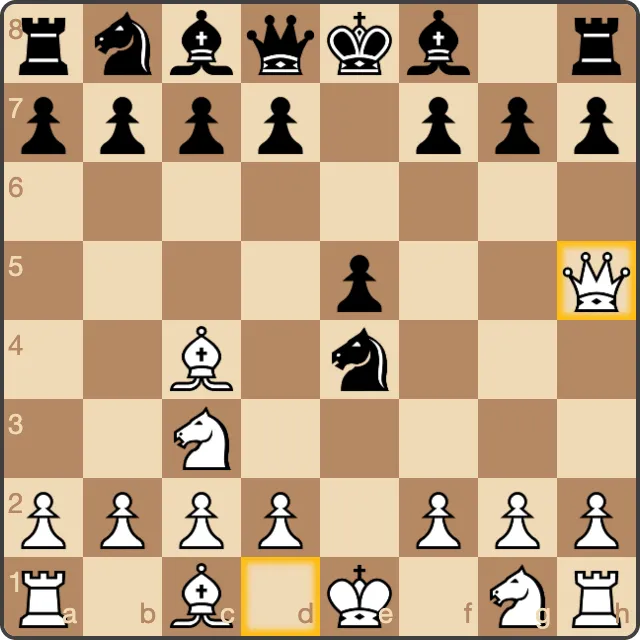
Here, White threatens Qxf7#, and Black must respond carefully to avoid immediate defeat.
The Vienna Game is a versatile opening that can suit both aggressive and positional players. By understanding its main lines and ideas, you can add a powerful weapon to your opening repertoire. Whether you're aiming for sharp tactics or solid development, the Vienna Game offers rich possibilities to explore.
Model Games


