

The Queen’s Indian Defense is a chess opening for black that starts with the moves 1.d4 Nf6 2.c4 e6 3.Nf3 b6. It is a solid opening that black can choose to play if they want a game with less risks and more positional play. This is a hypermodern opening, and a great choice for black to play against the Queen’s Gambit.
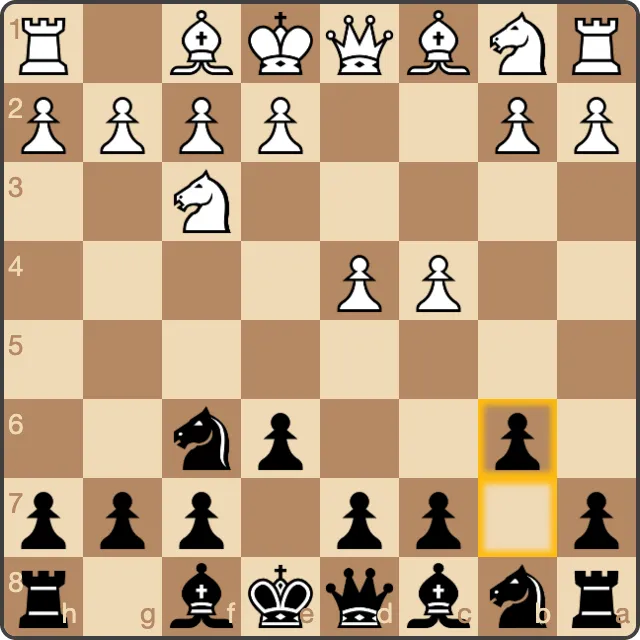
Queen's Indian Defense moves

Main Ideas in the Queen’s Indian Defense

The main idea of the Queen’s indian Defense is to try to control the center, and specifically the e4 and d5 squares, with the bishop placed in b7.

Black can also play their queen bishop to a6 first, creating pressure on the c4 pawn. This is in fact the most common plan for black.

White can play g3 and Bg2 to fight for the h1-a8 diagonal as well.

Most Played Moves in the Queen’s Indian Defense

1.d4 Nf6 2.c4 e6 3.Nf3 b6

Queen's Indian Defense after 1.d4 Nf6 2.c4 e6 3.Nf3 b6

Black has decided to play the Queen’s Indian Defense.

4.g3 Ba6
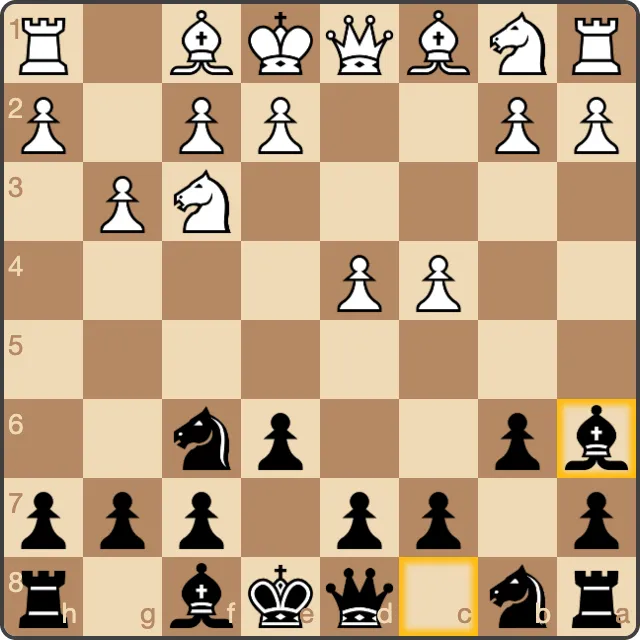
Queen's Indian Defense after 1.d4 Nf6 2.c4 e6 3.Nf3 b6 4.g3 Ba6

White decided to fianchetto their light-squared bishop as well. Black goes for pressure on the c4 pawn rather than a direct fight on the h1-a8 diagonal.

5.b3 Bb4
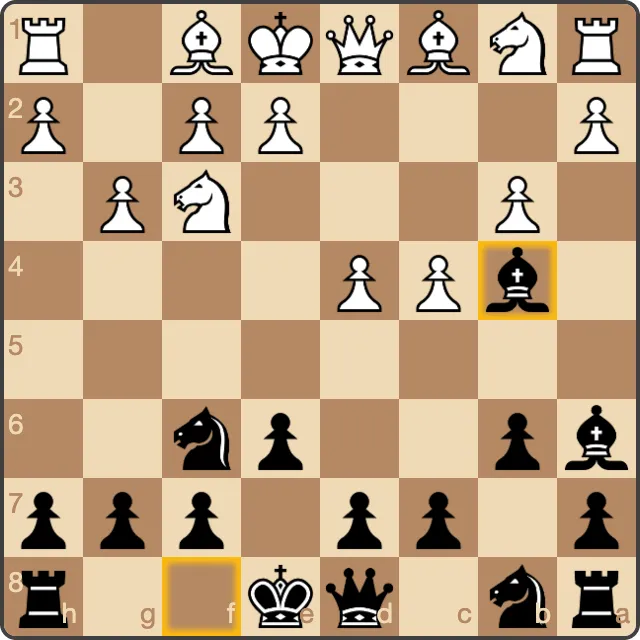
Queen's Indian Defense after 1.d4 Nf6 2.c4 e6 3.Nf3 b6 4.g3 Ba6 5.b3 Bb4+

White defends the c4 pawn and prepares a second fianchetto at the same time. Black develops their dark-squared bishop naturally to b4.

6.Bd2 Be7
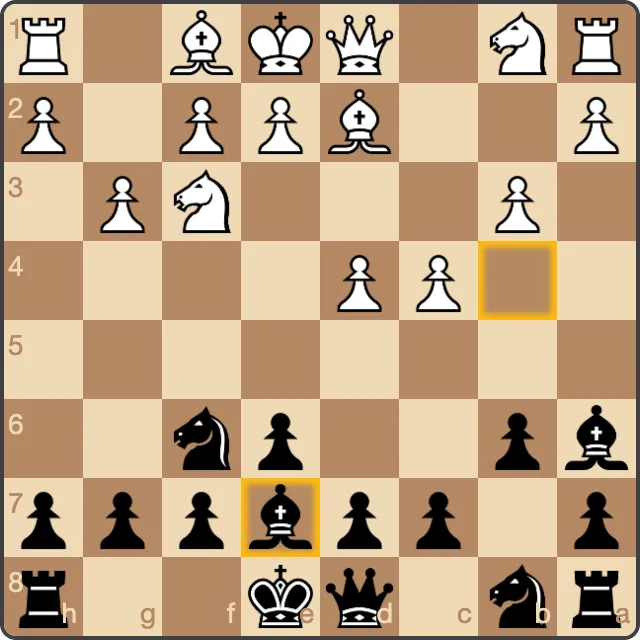
Queen's Indian Defense after 1.d4 Nf6 2.c4 e6 3.Nf3 b6 4.g3 Ba6 5.b3 Bb4+ 6.Bd2 Be7

Black avoids the exchange of bishops.

7.Bg2 c6
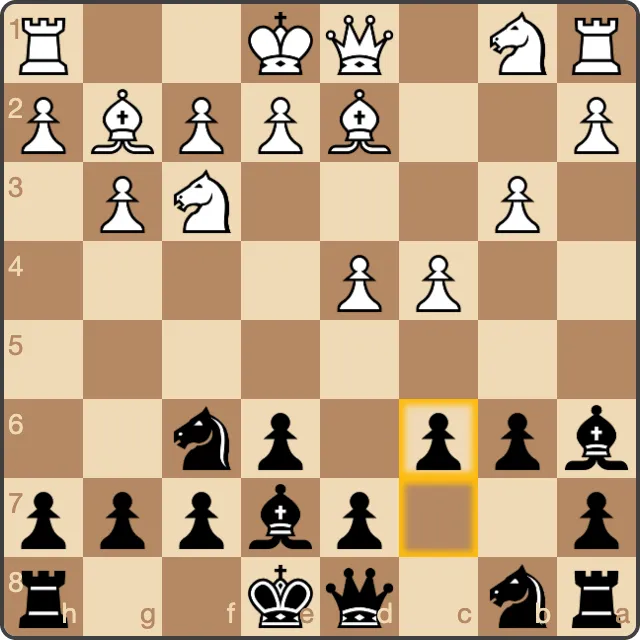
Queen's Indian Defense after 1.d4 Nf6 2.c4 e6 3.Nf3 b6 4.g3 Ba6 5.b3 Bb4+ 6.Bd2 Be7 7.Bg2 c6

Black prepares the d5 move.

8.Bc3 d5
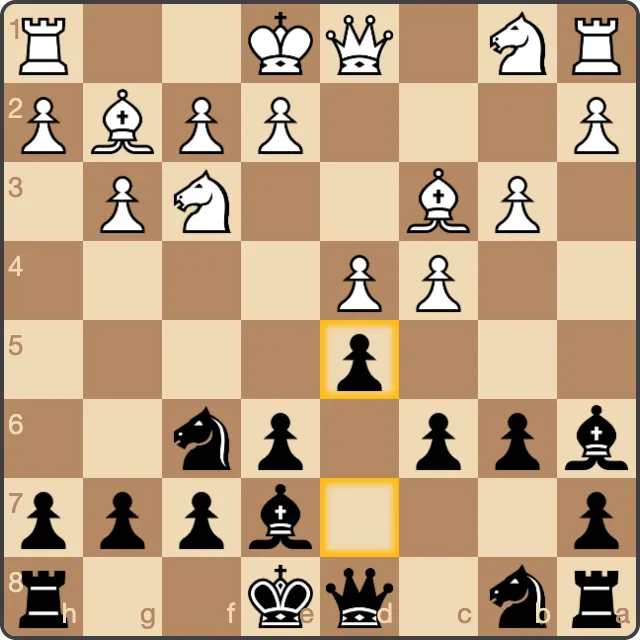
Queen's Indian Defense after 1.d4 Nf6 2.c4 e6 3.Nf3 b6 4.g3 Ba6 5.b3 Bb4+ 6.Bd2 Be7 7.Bg2 c6 8.Bc3 d5

White places their other bishop in the other diagonal, and black establishes a strong center with d5.

9.Ne5 Nfd7
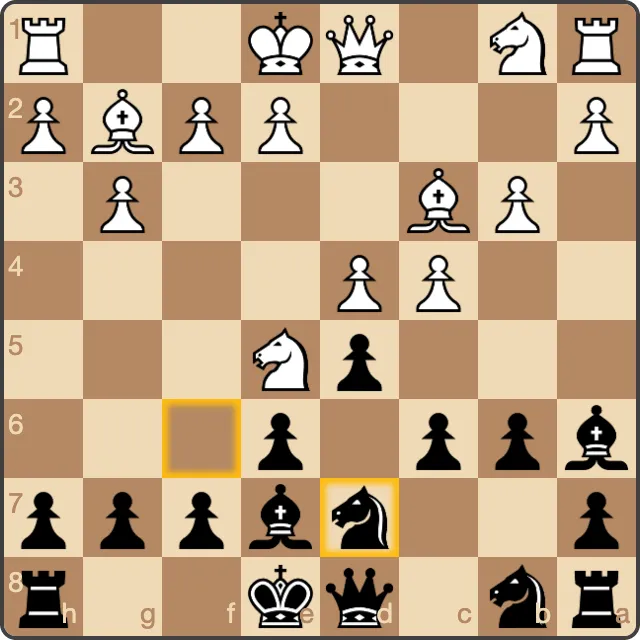
Queen's Indian Defense after 1.d4 Nf6 2.c4 e6 3.Nf3 b6 4.g3 Ba6 5.b3 Bb4+ 6.Bd2 Be7 7.Bg2 c6 8.Bc3 d5 9.Ne5 Nfd7

Ne5 is annoying for black because of the pressure on c6 and d5, so black immediately tries to exchange it.

10.Nxd7 Nxd7
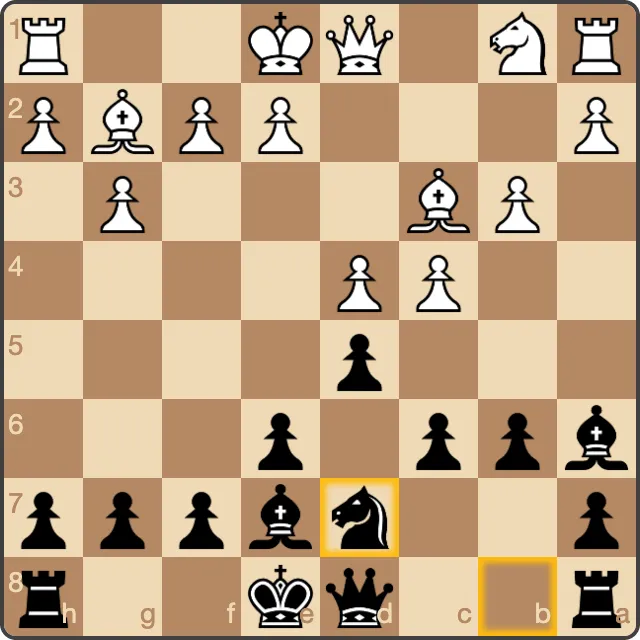
Queen's Indian Defense after 1.d4 Nf6 2.c4 e6 3.Nf3 b6 4.g3 Ba6 5.b3 Bb4+ 6.Bd2 Be7 7.Bg2 c6 8.Bc3 d5 9.Ne5 Nfd7 10.Nxd7 Nxd7

Main Line in the Queen’s Indian Defense

The main line of the Queen’s Indian Defense is, as we just saw, white playing 4.g3.

Apart from 4…Ba6, black can also play the natural 4…Bb7.
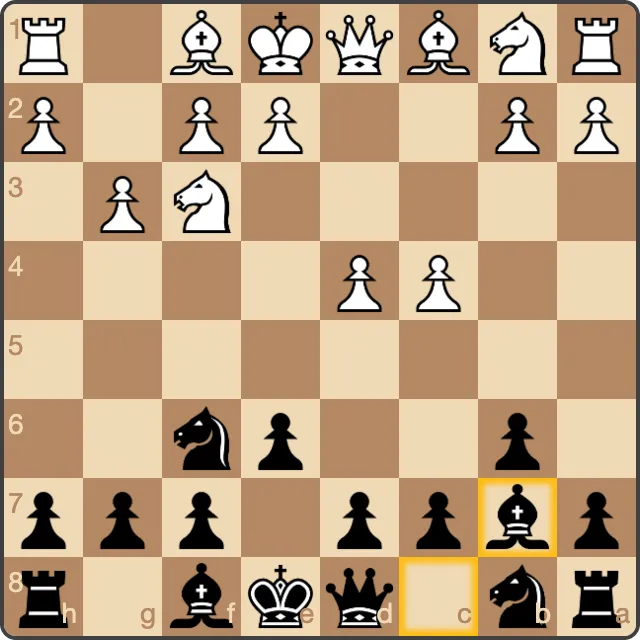
Queen's Indian Defense after 1.d4 Nf6 2.c4 e6 3.Nf3 b6 4.g3 Bb7

Play can continue with 5.Bg2 Be7 6.O-O O-O
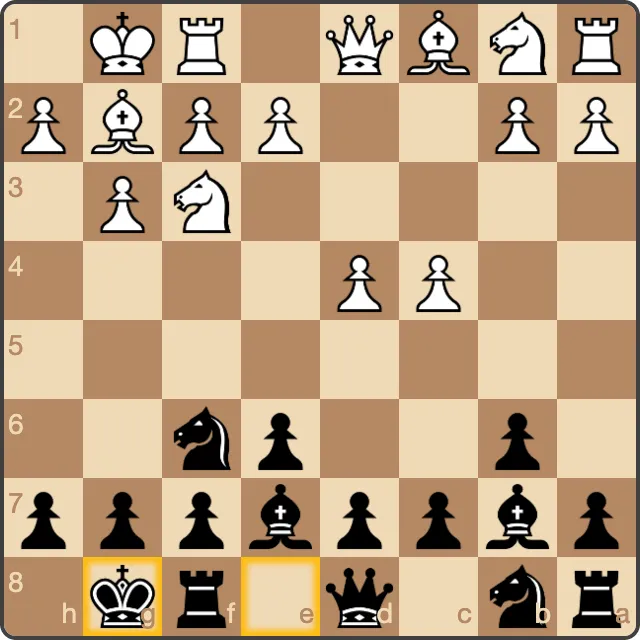
Queen's Indian Defense after 1.d4 Nf6 2.c4 e6 3.Nf3 b6 4.g3 Bb7 5.Bg2 Be7 6.O-O O-O

7.Nc3 Ne4 8.Nxe4 Bxe4
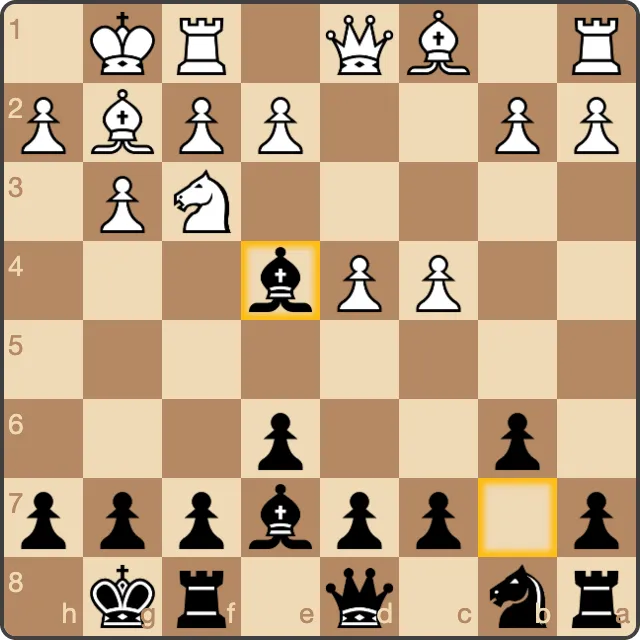
Queen's Indian Defense after 1.d4 Nf6 2.c4 e6 3.Nf3 b6 4.g3 Bb7 5.Bg2 Be7 6.O-O O-O 7.Nc3 Ne4 8.Nxe4 Bxe4

9.Ne1 Bxg2 10.Nxg2 d5
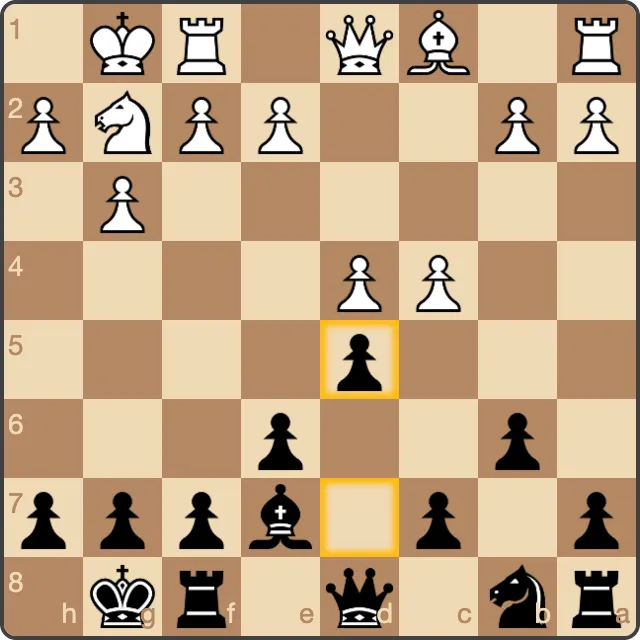
Queen's Indian Defense after 1.d4 Nf6 2.c4 e6 3.Nf3 b6 4.g3 Bb7 5.Bg2 Be7 6.O-O O-O 7.Nc3 Ne4 8.Nxe4 Bxe4 9.Ne1 Bxg2 10.Nxg2 d5

Petrosian Variation

In the Petrosian Variation of the Queen’s Indian Defense, white plays an early 4.a3 to prevent black’s dark-squared bishop from pinning the knight on c3.
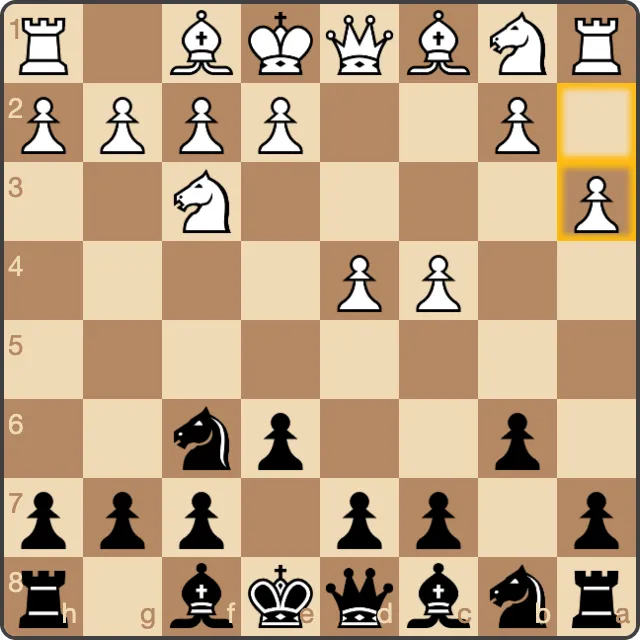
Queen's Indian Defense after 1.d4 Nf6 2.c4 e6 3.Nf3 b6 4.a3

Play can continue with 4…Bb7 5.Nc3 d5 6.cxd5 Nxd5 7.Qc2 Nxc3 8.bxc3 Be7.

Spassky System

In the Spassky System, white simply plays 4.e3 to try to develop naturally and castle early.
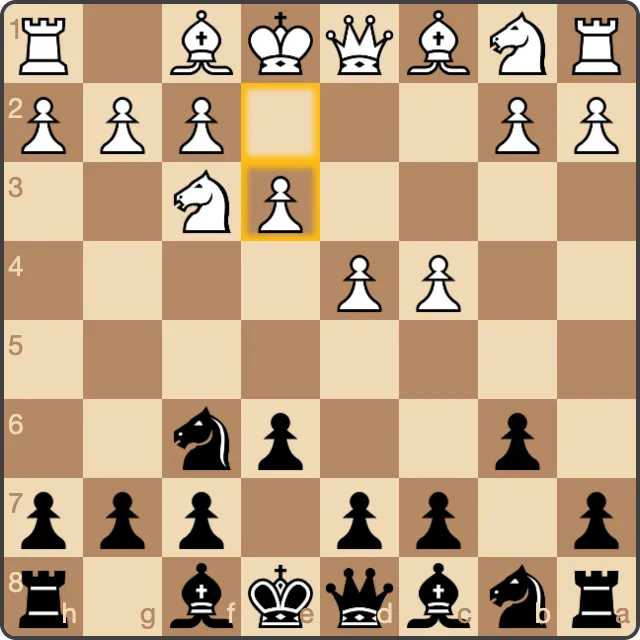
Queen's Indian Defense after 1.d4 Nf6 2.c4 e6 3.Nf3 b6 4.e3

Play can continue with 4…Bb7 5.Bd3 d5 6.O-O Bd6.

Miles System

Here white plays 4.Bf4
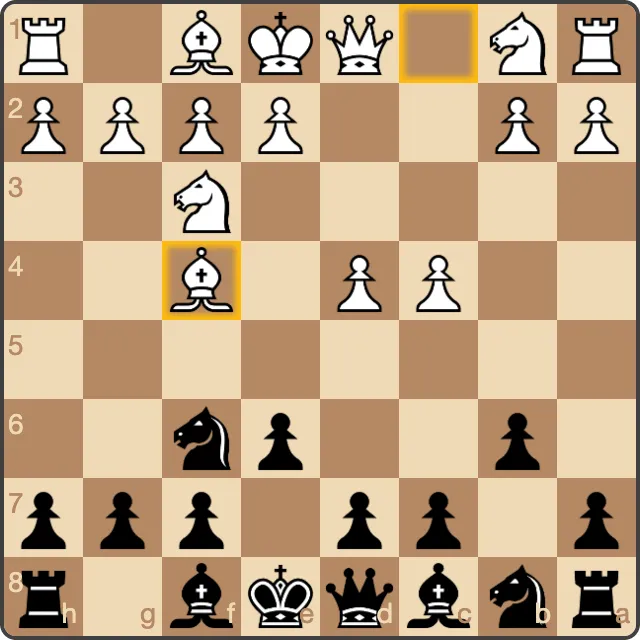
Queen's Indian Defense after 1.d4 Nf6 2.c4 e6 3.Nf3 b6 4.Bf4

Play can continue with 4…Bb7 5.e3 Be7 6.h3 c5.

Kasparov Variation

In the Kasparov Variation of the Queen’s Indian Defense, white plays 4.Nc3.
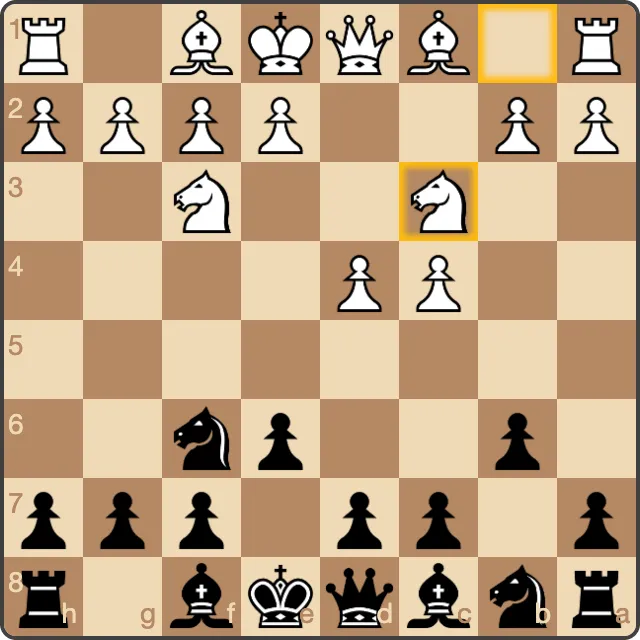
Queen's Indian Defense after 1.d4 Nf6 2.c4 e6 3.Nf3 b6 4.Nc3

If black plays 4…Bb4, it’s a mixture between the Queen’s Indian and the Nimzo-Indian.

Model Games

Aronian, Levon (2816) Carlsen, Magnus (2843)
ECO:
E18
Result:
½-½
1.d4 Nf6 2.c4 e6 3.Nf3 b6 4.g3 Bb7 5.Bg2 Be7 6.O-O O-O 7.Nc3 Ne4 8.Bd2 Bf6 9.Ne5 Nxc3 10.Bxc3 Bxg2 11.Kxg2 d5 12.Ng4 Nd7 13.Qa4 Be7 14.Rfd1 Nf6 15.Ne5 Qe8 16.Nc6 Kh8 17.f3 a6 18.Be1 Bd6 19.Rac1 b5 20.cxb5 axb5 21.Qxb5 Rxa2 22.Ba5 Qa8 23.Rd3 Nd7 24.Rdc3 Nb8 25.b4 Nxc6 26.Rxc6 Rb2 27.R6c2 Rxc2 28.Rxc2 Qa7 29.e3 h6 30.Qc6 Kg8 31.Kf2 Qa8 32.Kg2 Qxc6 33.Rxc6 Rb8 34.Bxc7 Bxc7 35.Rxc7 Rxb4 36.g4 Rb2+ 37.Kg3 g5 38.Rc3 Re2 39.h4 Kg7 40.Ra3 Kg6 41.h5+ Kf6 42.Rb3 Kg7 43.Ra3 Kf6 44.Rb3 Kg7 ½-½
Carlsen, Magnus (2881) Karjakin, Sergey (2772)
ECO:
E15
Result:
½-½
1.d4 Nf6 2.c4 e6 3.Nf3 b6 4.g3 Ba6 5.Nbd2 Bb7 6.Bg2 Be7 7.O-O O-O 8.b3 c5 9.Bb2 cxd4 10.Nxd4 Bxg2 11.Kxg2 Nc6 12.Nxc6 dxc6 13.e4 Qd3 14.e5 Ne4 15.Nf3 Rfd8 16.Re1 Nc5 17.Nd4 Rac8 18.Re3 Qxd1 19.Rxd1 Nxb3 20.axb3 c5 21.Red3 cxd4 22.Rxd4 Kf8 23.Kf3 Ke8 24.Ke4 Bc5 25.Rxd8+ Rxd8 26.Rxd8+ Kxd8 27.f3 Kc7 28.Bc3 Kc6 29.Kd3 b5 30.b4 Bg1 31.h3 Bf2 32.g4 Bg3 33.Kd4 a6 34.Kd3 Bf2 35.Bd2 Bg3 36.Bc3 Bf2 37.Bd2 Bg3 38.Bc3 ½-½
Kasparov, Garry (2838) Kramnik, Vladimir (2802)
ECO:
E12
Result:
½-½
1.d4 Nf6 2.c4 e6 3.Nf3 b6 4.Nc3 Bb7 5.a3 d5 6.cxd5 exd5 7.g3 Be7 8.Bg2 O-O 9.O-O Na6 10.Qc2 c5 11.Rd1 Nc7 12.dxc5 bxc5 13.Nh4 Rb8 14.Nf5 d4 15.Bxb7 Rxb7 16.Bg5 Ne6 17.Nxe7+ Rxe7 18.Bxf6 gxf6 19.Qf5 Kg7 20.Ne4 Rc7 21.Rd3 c4 22.Rf3 Ng5 23.Rf4 Nxe4 24.Rxe4 Re8 25.Rg4+ Kf8 26.Rd1 Qd7 27.Qf4 Rxe2 28.Rxd4 Qc6 29.Rd1 Rd7 30.Rf1 Qe6 31.Qb8+ Qe8 32.Qb4+ Qe7 33.Qxc4 f5 34.Rf4 Qe6 35.Qc3 Re5 36.Rc4 f6 37.Rc8+ Kg7 38.Rc7 Rxc7 39.Qxc7+ Qf7 40.Rc1 Re1+ 41.Kg2 Rxc1 42.Qxc1 Qb7+ 43.Kg1 Qf3 44.Qe3 Qd1+ 45.Kg2 Kg6 46.b4 a6 47.h4 h5 48.Qb6 Qe2 49.a4 f4 50.a5 Qd2 51.gxf4 Qxf4 52.Qxa6 Qg4+ ½-½

Queen’s Indian Defense with IM Marcin Sieciechowicz

Other Interesting Articles